Object Status:
Unlocated
Accession Date:
1794
Primary Source Reference:
A Scientific and Descriptive Catalogue of Peale's Museum (Philadelphia, 1796), pp. 6-7
Additional Source Text:
In his "Walk through the Phil[adelphi]a Museum" (1805-1806), pp. 8-9, Peale wrote that the animal "was alive at the Museum several years -- his sagasity in drawing fruits that was thrown to him, if out of the reach of his hands, by making use of a stick (which if he found too short, he would change for another), plainly demonstrates that he was not devoid of reflection.
"Baboons, which are larger than Monkies, differ from them in having short tails, & occasionally in other respects. Infinite is the Variety among this tribe of Animals, both in form & Disposition; those having long canine tooth being more ferocious than such as have them no longer than the other teeth--this was exemplified in several of those we have in view; particularly ilnatured and vicious was No. [blank?]. It would bite the hand that gave it food in the moment of receiving it, on the contrary No. [blank] was remarkably good humoured, affectionate and innofensive; she would hold a baby in her Arms, and seem to hug it with great affection, it is a pleasure to remember its amicable disposition."
Notes:
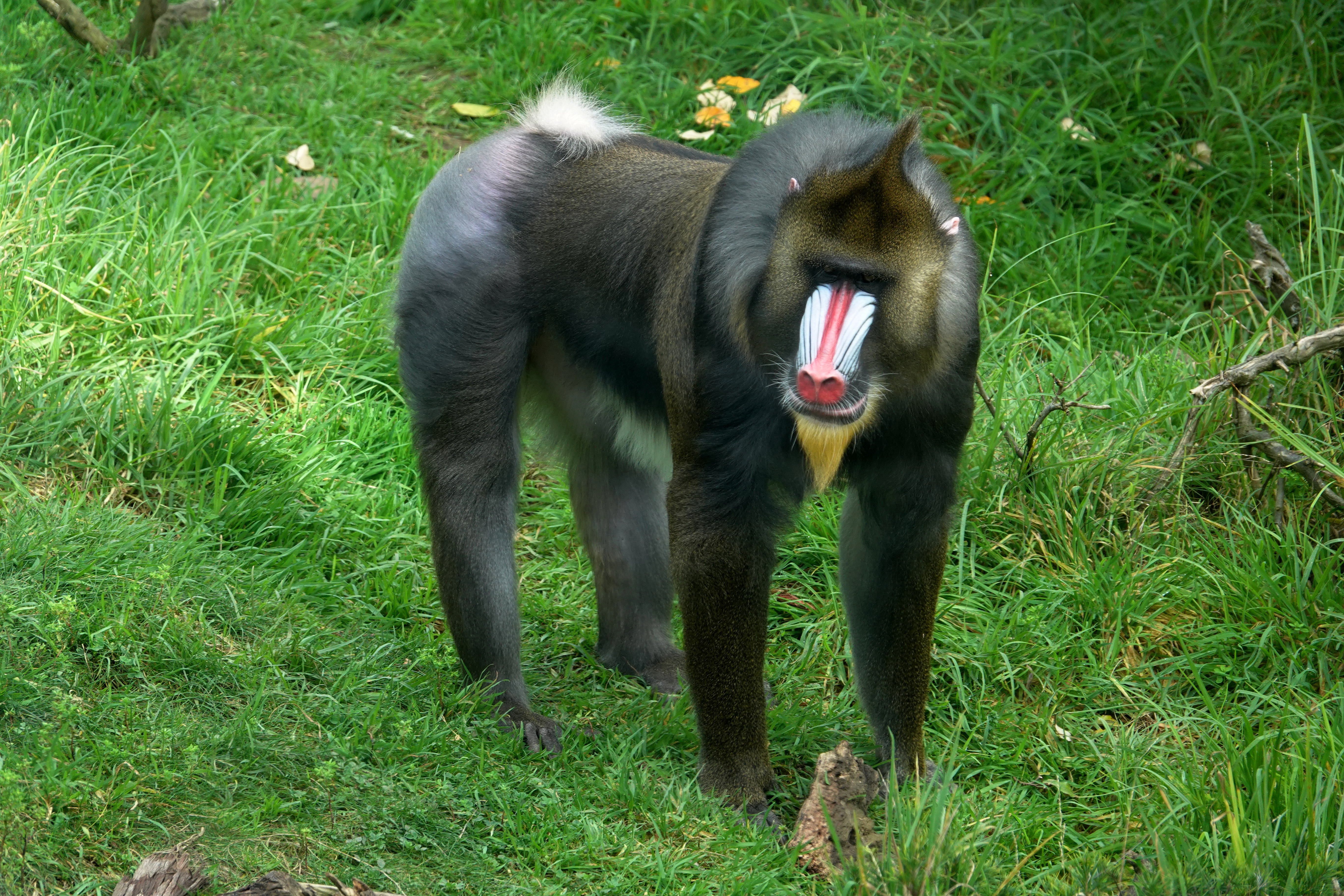
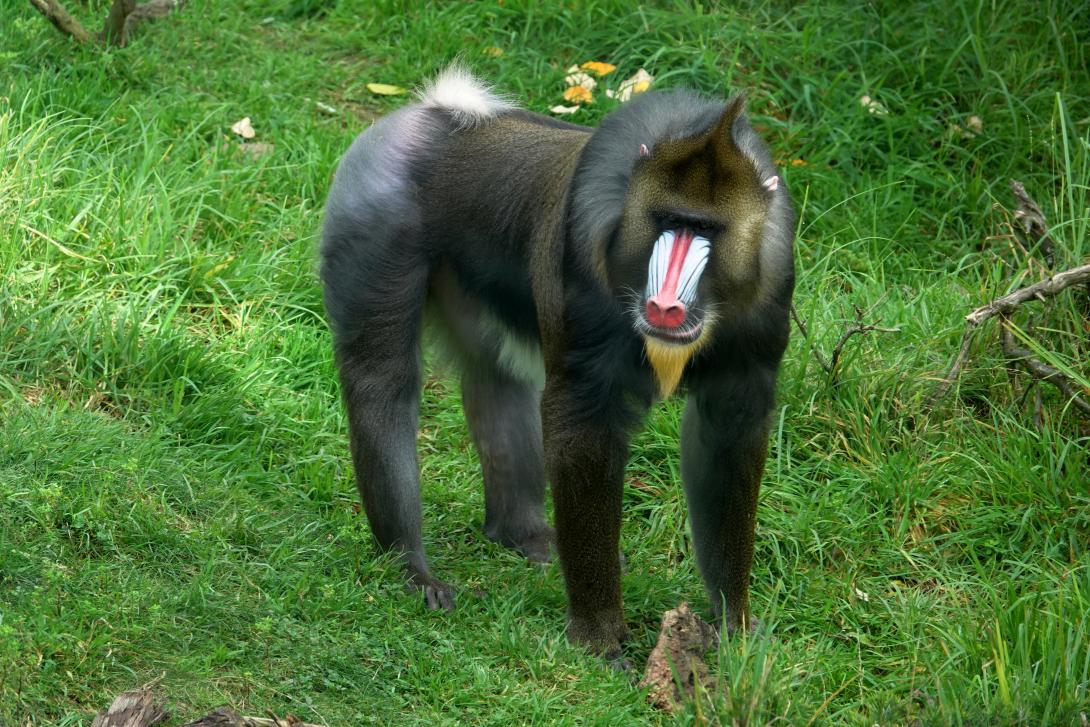
The mandrill (Mandrillus sphinx) is a primate of the Old World monkey (Cercopithecidae) family. It is one of two species in the genus Mandrillus, along with the drill. Although they look superficially like baboons, they are more closely related to mangabeys of the genus Cercocebus.
Specimen Type:
Living/Live (presumably eventually taxidermied/preserved)
Peale's Common Name:
Mandrill ape
Peale's Scientific Name:
Mandrill, Buffon; Simia maimon, Lin.; Ribbed nose ape, Penn.
Current Common Name:
Mandrill
Current Scientific Name
Mandrillus sphinx