Object Status:
Unlocated
Accession Date:
By 1799
Primary Source Reference:
Natural History Lecture No. 7 (1799), Academy of Natural Sciences of Drexel University
Additional Source Text:
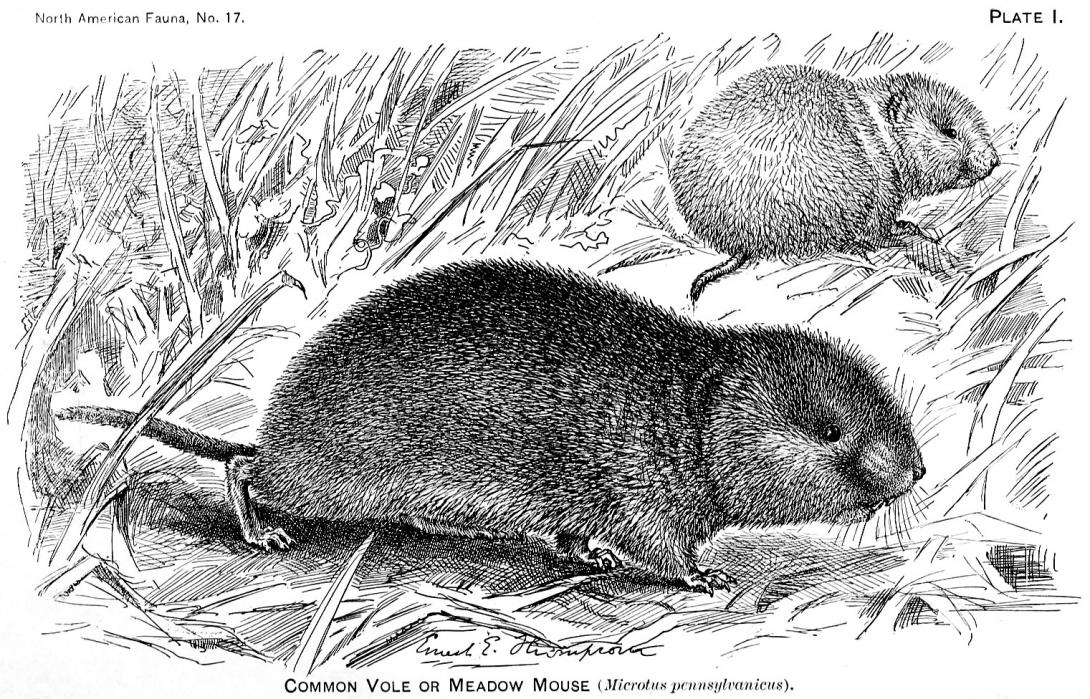
"The tail of this animal, two thirds shorter than its body, is a little hairy. It has four toes on each foot; the great toes of the fore-feet, very short; Ears hairy within. This animal I found in Maryland & suppose it is likewise troublesome in all the states. It is easily distinguishable from others of the same genus, by the bigness of its head, as well as by the tail which is not more than one Inch in length. In England they have a long tailed field mouse as well as one with a short tail.
"The encrease of these animals is so great, that if it was not for the ravage made among them by snakes and owls, they would destroy whole fields of grain."
Notes:
The eastern meadow vole (Microtus pennsylvanicus) is sometimes called the field mouse or meadow mouse.
On 10 September 1822 the Museum received "2 Specimens of Meadow mouse (Arvicola) living" from Mr. Gilliams, likely Jacob Gilliams, a dentist and one of the founders of the Academy of Natural Sciences of Philadelphia. Peale Museum Accessions Book, Historical Society of Pennsylvania, p. 121
Specimen Type:
Living/Live (presumably eventually taxidermied/preserved)
Peale's Common Name:
Meadow mouse
Peale's Scientific Name:
Arvieola
Current Common Name:
Eastern meadow vole
Current Scientific Name
Microtus pennsylvanicus