Object Status:
Unlocated
Accession Date:
October 4, 1787
Primary Source Reference:
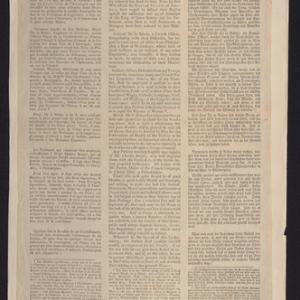
Pennsylvania Packet (Philadelphia), 4 Oct 1787
Additional Source Text:
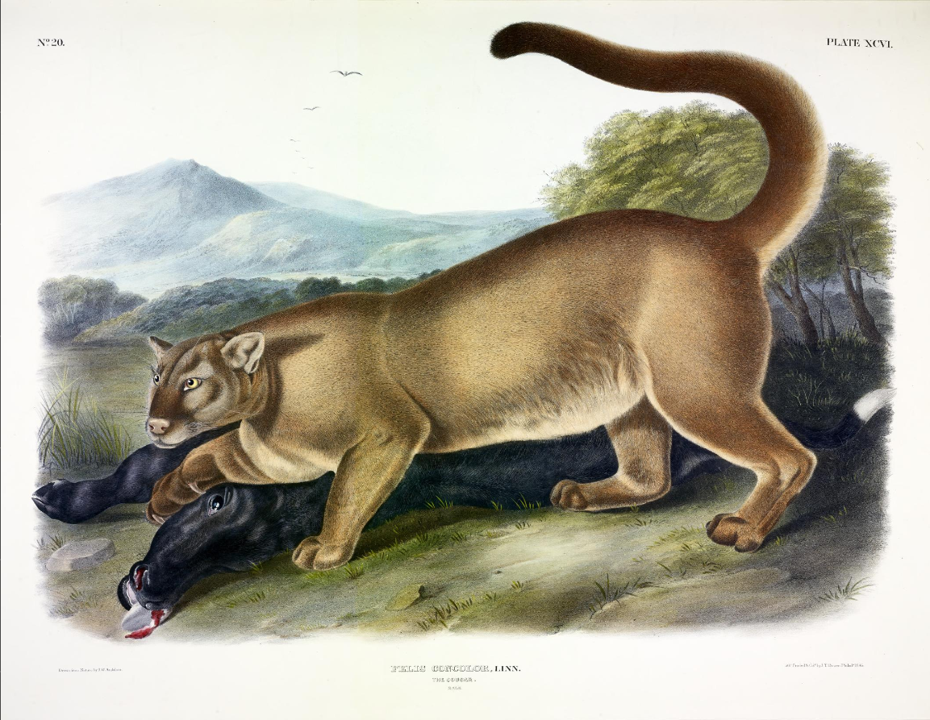
"Mr. Peale hath lately received from Captain Ferguson, of the artillery, at Fort McIntosh, Two Panthers, which are now to be seen, neatly preserved, in his Museum. One of them is eight feet in length, and the other seven and a half."
Peale wrote to George Washington on 27 Sep 1787 that he had received "a pair of Panthers, male & female of full groath. -- most Terrifick Animals" (Selected Papers, 2, part 1: 490). Also listed in Pennsylvania Packet (Philadelphia), 23 Aug 1788, and State Gazette of South Carolina (Charleston), 22 Sep 1788.
Also mentioned in 1796 Scientific & Descriptive Catalogue, p. 32, and in Walk through the Museum (1805), pp. 19-20, in which Peale wrote: "North America has no Lyons -- the largest of this genus is the (Puma) Couguar as Buffon calls [it]. It is commonly known here by the name Panther, which confounds it with the African Animal. Although powerful, it is timid, and runs away at the sight of man. The smallest Cur in company with his Master drives it into the Shelter of the nearest tree."
Notes:
This specimen, which Peale called Felis concolor, was one of the extirpated population of cougars that lived in northeastern North America. It was presumably shot near Fort McIntosh, on the Ohio River in western Pennsylvania near the Ohio border. (Selected Papers, 1: 490n)
Capt. (later Major) William Ferguson of the U.S. Artillery was killed at the Battle of the Wabash (St. Clair's Defeat) on 4 Nov 1791.
Charles Beatty Alexander, Major William Ferguson: Member of the American Philosophical Society, Officer in the Army of the Revolution and in the Army of the United States (New York, 1908)
Specimen Type:
Dead/preserved
Peale's Common Name:
Panther
Current Common Name:
Eastern cougar, or eastern puma
Current Scientific Name
Puma concolor couguar