Object Status:
Unlocated
Accession Date:
By 1799
Primary Source Reference:
Natural History Lecture No. 7 (1799), Academy of Natural Sciences of Drexel University
Additional Source Text:
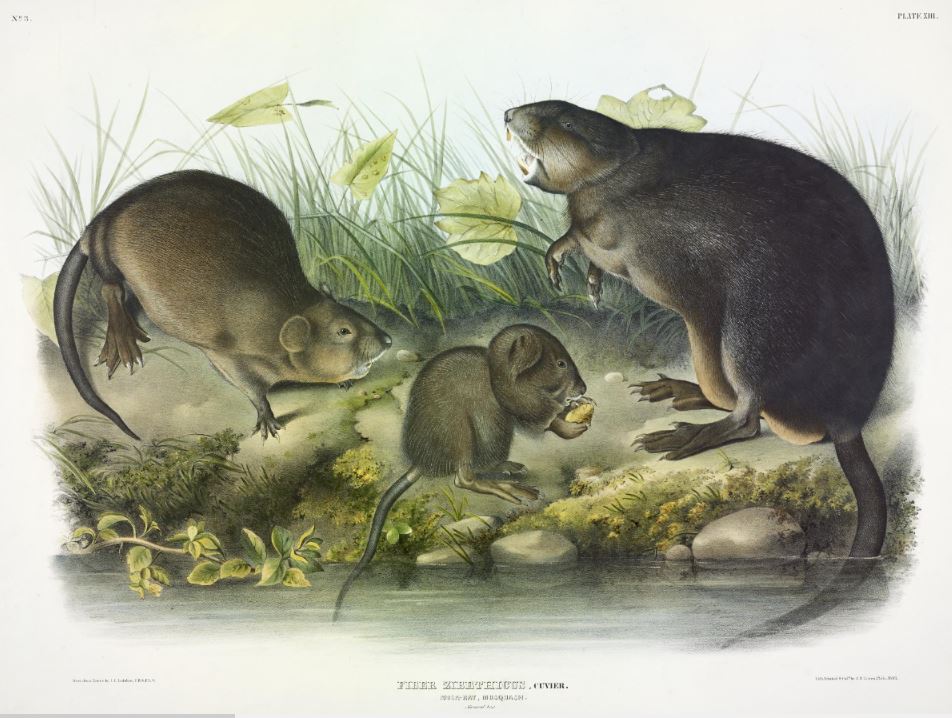
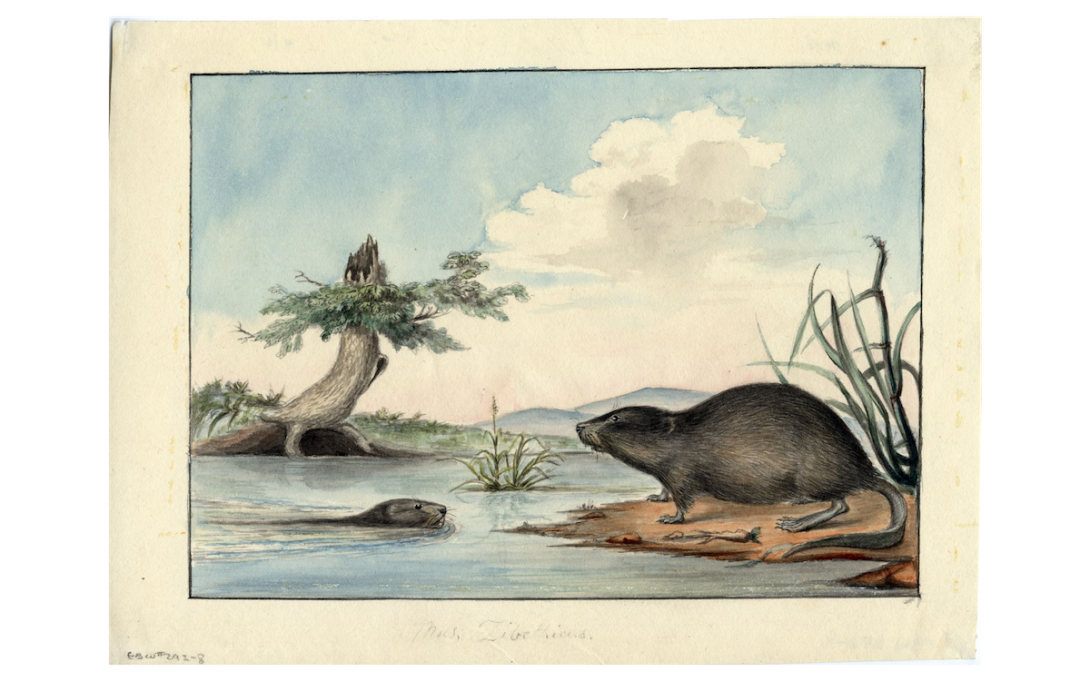
"Musk-Rat, or the Mus Tebethicus of Linnaeus – Is equal in size to a Rabbit, but in the form of a common Rat with very short legs, its hair is soft and shining with thick tho’ short fur beneath, its ears are hairy within and without. It is found about the banks of Meadows bordering on waters in all parts of the United States."
In his "Walk through the Phil[adelphi]a Museum" (1805-1806), pp. 29-30, Peale wrote: "Here are two of them -- the white is uncommon -- Their skins afford a short but fine fur, useful to Hatters, but the Animal is very troublesome in the embankment of meadows throughout the united states. The Indians say, the musk-rat and Beavor are brothers, but that the Beaver is the Elder, and has more genius than his younger brother. They however manifest much ingenuity in building their habitations."
Notes:
Titian Ramsay Peale executed a watercolor of the muskrat while engaged on the Long Expedition, 1819-1820.
In Natural History Lecture 7 Peale reported that the "white musk-rat is rare, some accidental shock in the Animal economy, may have caused this uncommon change of color. It was found in the state of Delaware."
Specimen Type:
Dead/preserved
Peale's Common Name:
Musk-rat
Peale's Scientific Name:
Mus Zebethecus
Current Common Name:
Muskrat
Current Scientific Name
Ondatra zibethicus