Object Status:
Unlocated
Accession Date:
By 1799
Primary Source Reference:
Natural History Lecture No. 3 (1799), Academy of Natural Sciences of Drexel University
Additional Source Text:
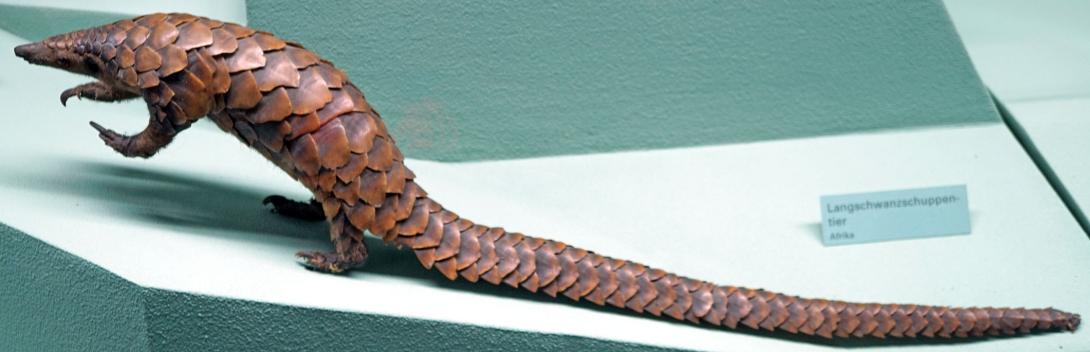
"There are two species of the Manis, or as some have improperly called them Scaly Lizards. These are viviparous and lizards oviparous. The Pentadactyla, or short tailed Manis, with 5 toes on each foot, and the Tetradactyla or long tailed Manis, which is before us – both of them are without Teeth, hence they are properly placed in the order Bruta. Altho’ this is an imperfect Animal, yet I am glad to possess it since it will give you the general Idea of the Manis, which is an innocent, harmless Animal. Slow of motion, they have no defence except that of rolling itself up like a Ball and presenting those Scales at right angles on every side. In this Situation neither the Lyon, Tyger, or any other Animal can hurt the Manis, for each of these Scales are pointed, and being separate, it can raise or lower them at pleasure. Each of them is striated and beautiful, much like Tortoise shell. The Indians make various uses of them, and also eat their flesh. They inhabit the Islands of India."
In his "Walk through the Phil[adelphi]a Museum" (1805-1806), pp. 14-15, Peale wrote: "Would become the prey of others, but its coat of Scales have sharp points, which it erects at pleasure as a complete defence."
Specimen Type:
Dead/preserved
Peale's Common Name:
Long-tailed manis
Peale's Scientific Name:
Manis tetradactyla
Current Common Name:
Long-tailed pangolin
Current Scientific Name
Phataginus tetradactyla