Object Status:
Unlocated
Accession Date:
By 1799
Primary Source Reference:
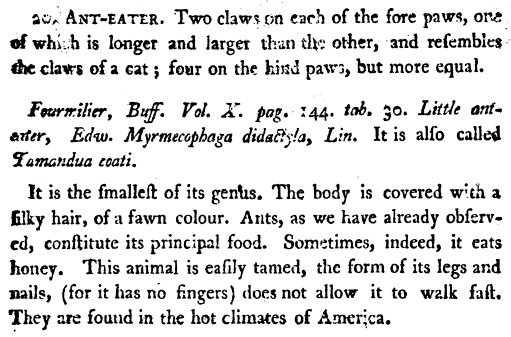
A Scientific and Descriptive Catalogue of Peale's Museum (Philadelphia, 1796), p. 18
Additional Source Text:
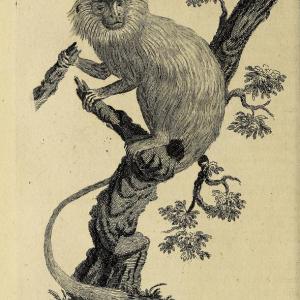
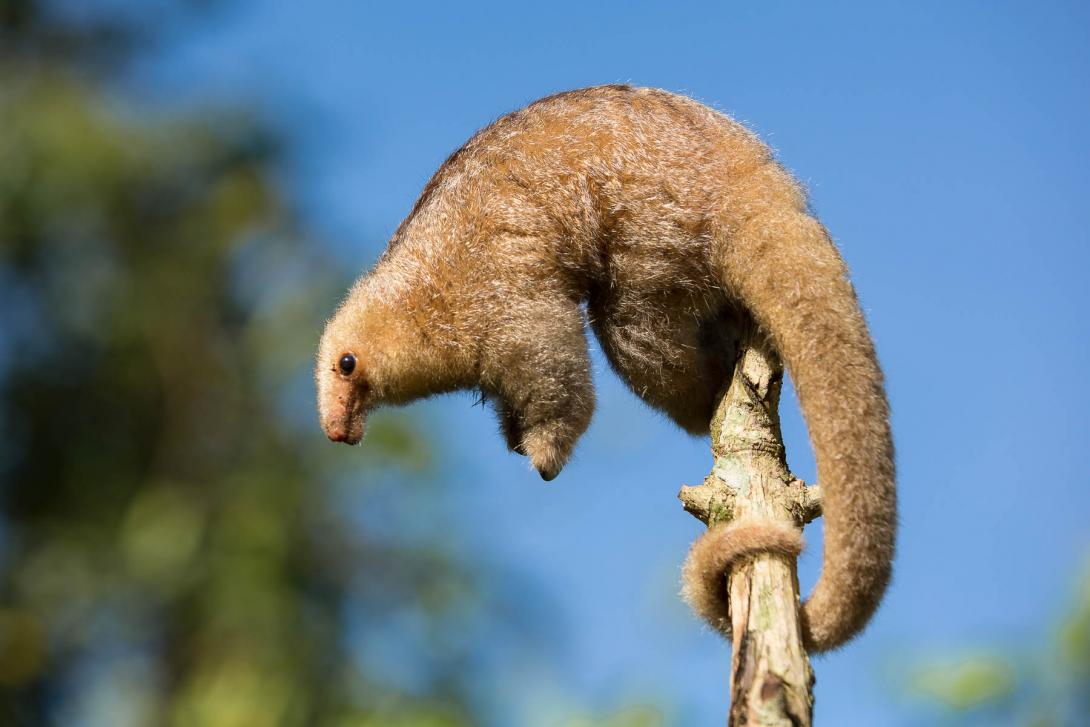
In his 1799 Natural History Lecture No. 3 (Academy of Natural Sciences of Drexel University), Peale wrote: "This Ant Eater has two claws on each of the fore feet. One is longer than the other, and resembles the claws of a Cat. On the hind feet it has four claws, but more equal in length. Its tail is prehensile, and is very useful to it in climbing trees. When a species of Ant builds their nest on the branches, it thrusts its long cylindrical tongue into the Ants nest. The Ants, sticking to it, are then drawn back and thus it is fed and supported.
Altho’ these Animals have no teeth, yet they can very well defend themselves with their Claws, and once they have got a good hold, its claws are not easily unclinched. They are an Animal so slow in its movement, that if one of them is placed on a walking cane, a Person may walk from one end of the town of Cayenne to the other before it shall descend to the bottom of the cane. It is an inhabitant of South America."
In his "Walk through the Phil[adelphi]a Museum" (1805-1806), p. 13, Peale wrote: "The little ant-eater is the reverse of this [the giant ant-eater] in its hair, which is as fine & soft as silk. Its prehensile tail is very useful in climbing trees where a species of Ants build their nests on the branches. Like the other, it has a long cylindrical Tongue. They are so slow, that [when placed on] made to hold by a walking Cane a person may walk with it a considerable distance before it can get to the bottom."
Notes:
The silky anteater (Cyclopes didactylus), also known as the pygmy anteater, has traditionally been considered a single species of anteater, in the genus Cyclopes, the only living genus in the family Cyclopedidae. Found in southern Mexico, and Central and South America, it is the smallest of all known anteaters.
Specimen Type:
Dead/preserved
Peale's Common Name:
Little anteater
Peale's Scientific Name:
Myrmesophaga didactyla, Lin.
Current Common Name:
Silky anteater
Current Scientific Name
Cyclopes didactylus