Object Status:
Extant
Accession Date:
By 1799
Primary Source Reference:
Charles Willson Peale, Lecture on Natural History 23. (ca. 1799). Academy of Natural Sciences of Drexel University Archives, coll. 40. / https://ansp.org/research/library/archives/0000-0099/coll0040/
Additional Source Text:
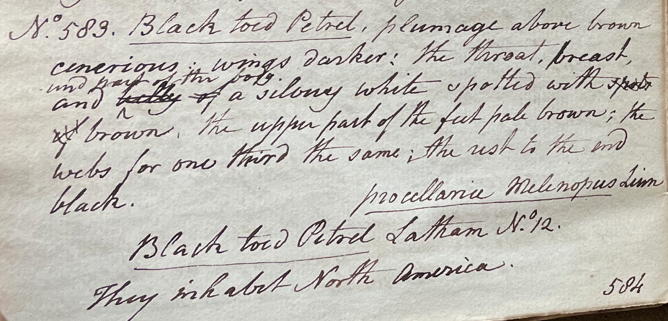
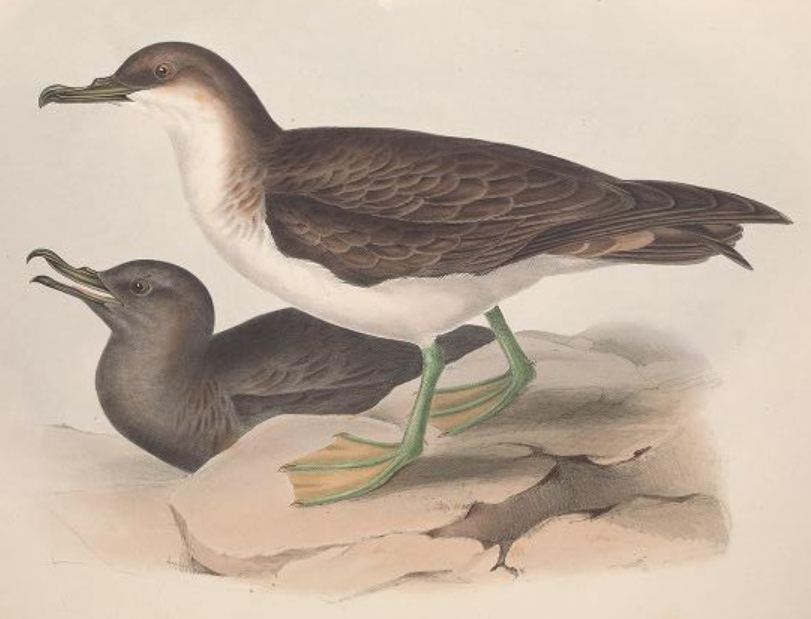
Charles Willson Peale (1741-1827) wrote, in his 23rd Lecture (ca. 1799): "No. 583. Black toed Petrel. plumage above brown cenerious; wings darker; the throat, breast, and under part of the body a silvery white spotted with brown. the upper part of the feet pale brown; the webs for one third the same; the rest to the end black. Procellaria melenopus Linn. Black toed Petrel Latham No. 12. They inhabit North America." (Academy of Natural Sciences of Drexel University Archives, coll. 40)
Peale wrote, in "A Walk Through the Philad[elphi]a Museum" (1805–1806): "Here is the Black toed Petrel (P. Melenopus)." (Historical Society of Pennsylvania, coll. 0481)
Notes:
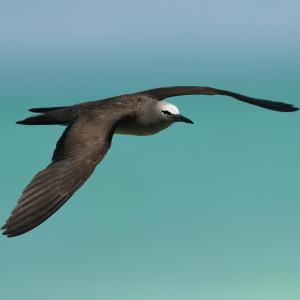
Latham’s “Black-toed Petrel," which served as the basis of P. melanopus J. F. Gmelin, 1789, was based on a specimen from the Pacific Ocean in the Leverian Museum (see David G. Medway, 1993, "The correct identity of the black-toed petrel Procellaria melanopus Gmelin, 1789," Notornis 40: 263-269). In contrast, Peale’s specimen, which unlike P. melanopus had uniform “silvery white” underparts with brown spots, almost certainly originated in the Atlantic Ocean and is a reasonable match to A. gravis. / https://www.birdsnz.org.nz/wp-content/uploads/2021/12/Notornis_40_4_263… Stone (1937: 89, Bird studies at Old Cape May, vol. 1, Philadelphia: Delaware Valley Ornithological Club), who was unaware of the extent of Peale's collection, noted: "...so far as I am aware [there are] only two records from this part of the Atlantic."
Specimen Type:
Dead/preserved
Current Common Name:
Greater Shearwater
Current Scientific Name
Procellariidae | Ardenna gravis