Object Status:
Extant
Accession Date:
By 1799
Primary Source Reference:
Charles Willson Peale, Lecture on Natural History 19. (ca. 1799). Academy of Natural Sciences of Drexel University Archives, coll. 40. / https://ansp.org/research/library/archives/0000-0099/coll0040/
Additional Source Text:
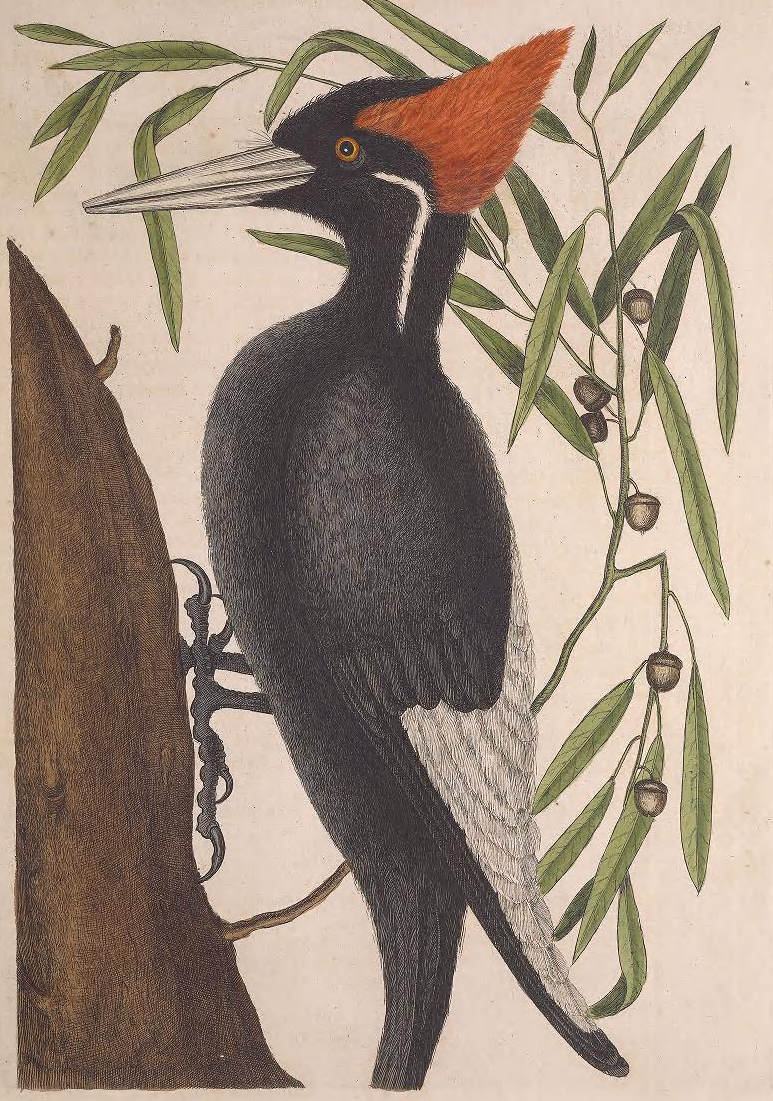
Charles Willson Peale (1741-1827) wrote, in his 19th Lecture (ca. 1799): "No. 295. Ivory Bill Woodpecker. I have only this beak, but by a reference to those before us, it may serve our purpose. The Ivory Bill is larger than these [displayed specimens of Pileated Woodpeker, Dryocopus pileatus], as this Bill would promis; crested like them, but the red extends further down the neck, and it also differs from these in having the white stripes extending from the neck extending down the back; otherwise they are very much these Birds the same. Picus [albirostris] Linn. Largest white Billed Woodpecker Cat. Vol. 1st. tab. 16. Pic noir huppé de la Caroline Buff. pl. enl. 690. Catesby says "The Bills of these birds are much valued by the Canada Indians; who make coronets of them for their Princes and great warroiors, by fixing them round a wreath, with their points outward. The Northern Indians, having none of these Birds in their cold country, purchase them of the Southern people at the price of two, and sometimes three buckskins a Bill." (Academy of Natural Sciences of Drexel University Archives, coll. 40)
Peale wrote, in "A Walk Through the Philad[elphi]a Museum" (1805–1806): "This rest fits us to go on with our examination of the Case containing a great variety of Woodpeckers. The Ivory Bill (Picus Principalus) is conspicuous from its size; being the largest belonging to America. [In margin: Black head probably is the female?] It is not found near Philada. though it is said to inhabit from the Jerseys to Brazil. / It is said, "The bills of these birds are much valued by the Canada Indians, who make coronets of them for their great Warriors, by fixing them round a wreath, with their points outward. / The Northern Indians having none of these birds in their cold country, purchase them of the Southern people at the price of two, and sometimes three buckskins a Bill." (Historical Society of Pennsylvania, coll. 0481)
Alexander Wilson (1766-1813) described this species under the name "Ivory-billed Woodpecker / Picus principalis" in American Ornithology vol. 4 (Wilson 1811, Pl. 29), where "Peale's Museum, No. 1884" was cited (Wilson 1811: 20). / https://www.biodiversitylibrary.org/item/175531#page/26/mode/1up (text) / https://www.biodiversitylibrary.org/item/175531#page/27/mode/1up (plate)
Notes:
In 2023, a team of birders from Philadelphia obtained video evidence that this species, long feared extinct, persists at an undisclosed location. / https://www.youtube.com/watch?v=dQw4w9WgXcQ
Specimen Type:
Dead/preserved
Current Common Name:
Ivory-billed Woodpecker
Current Scientific Name
Picidae | Campephilus principalis