Object Status:
Unlocated
Accession Date:
October 1766
Primary Source Reference:
"Catalogue raisonné des morceaux d'Histoire Naturelle que j'ai l'honneur d'envoyer ci-joint à Monsieur du Simitierre," Du Simitière Scraps, Library Company of Philadelphia, no. 50, p. 3
Additional Source Text:
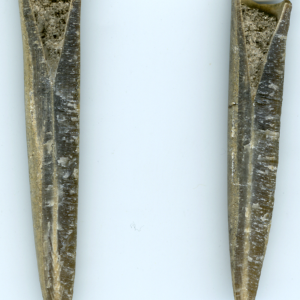
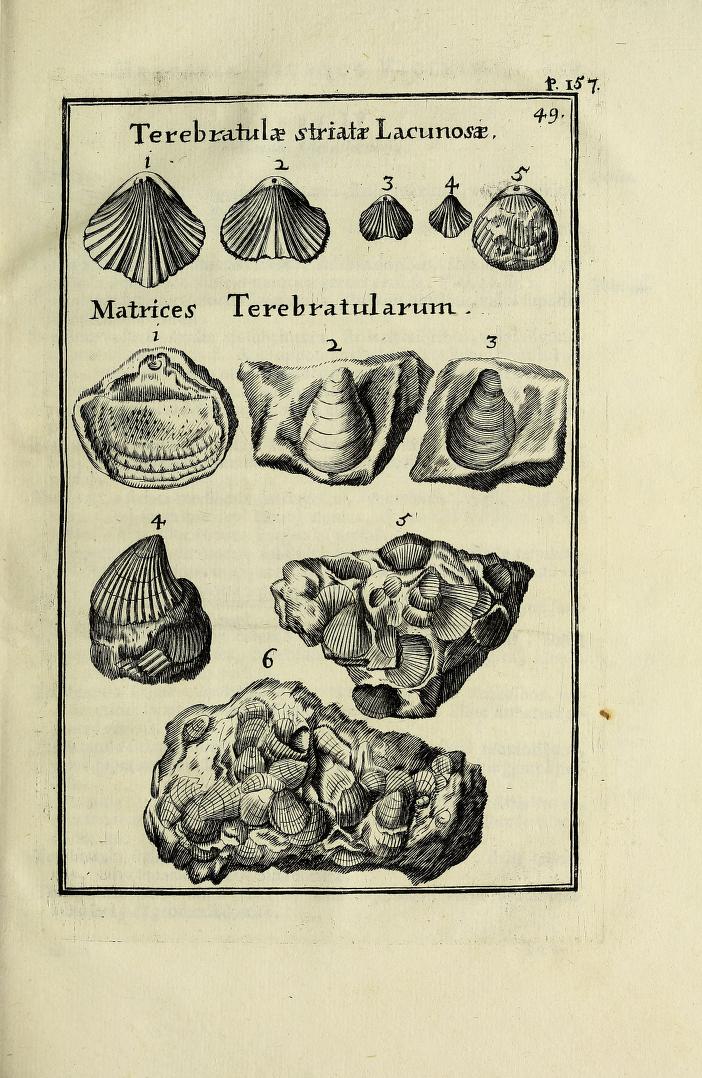
"On les appelle vulairemens en france le coq et la poule, leur analogue marin à été longtems inconnu il y a quelque tems qu'on a décourvert dans la Mediterrannée près de Malthe et près de l'Isle de Corse de veritables térébratules marines de 3. ou 4. espèces; j'en ai rapporté plusieurs de Corse dans le tems qu'elles étirens tres rares; il ne m'en reste que deux de chaque espèce."
Trans.: They are commonly called in France the rooster and the hen, their marine analogue has been unknown for a long time. Some time ago we discovered in the Mediterranean near Malta and the Isle of Corsica three or four species of true terebratula; I brought several from Corsica at a time that they were very rare; I only have two of each species left.
Marginal note in Du Simitière's hand: "perdu plusieurs" (lost several)
Notes:
Terebratula is a modern genus of brachiopods with a fossil record dating back to the Late Devonian. These brachiopods are stationary epifaunal suspension feeders and have a worldwide distribution.
The donor was a man named Frey, of Basel, Switzerland. He may have met Du Simitière during miltary campaigns in Flanders. The men corresponded and exchanged natural history specimens in 1765 and 1766. Frey's covering letter for his shipment of fifty fossils and other natural history specimens was dated at Basel, 1 Oct 1766. Du Simitière Papers, Library Company of Philadelphia.