Object Status:
Unlocated
Accession Date:
October 1766
Primary Source Reference:
"Catalogue raisonné des morceaux d'Histoire Naturelle que j'ai l'honneur d'envoyer ci-joint à Monsieur du Simitierre," Du Simitière Scraps, Library Company of Philadelphia, no. 50, p. 2
Additional Source Text:
"Formu de Thionville, et un fragment d'une transparente de Hongria. Il est certain que c'est un corps marin, car on en trouve couvers de vermicularites, mais l'on est fort partagé Sur la nature du corps dont il provient, son analogue marin etant inconnue."
Trans.: Formation of Thionville [France], and a transparent fragment from Hungary. It is certain that it is a marine body, because we find them covered with vermicularites, but we are very divided on the nature of the body it came from, its marine analogue being unknown."
Notes:
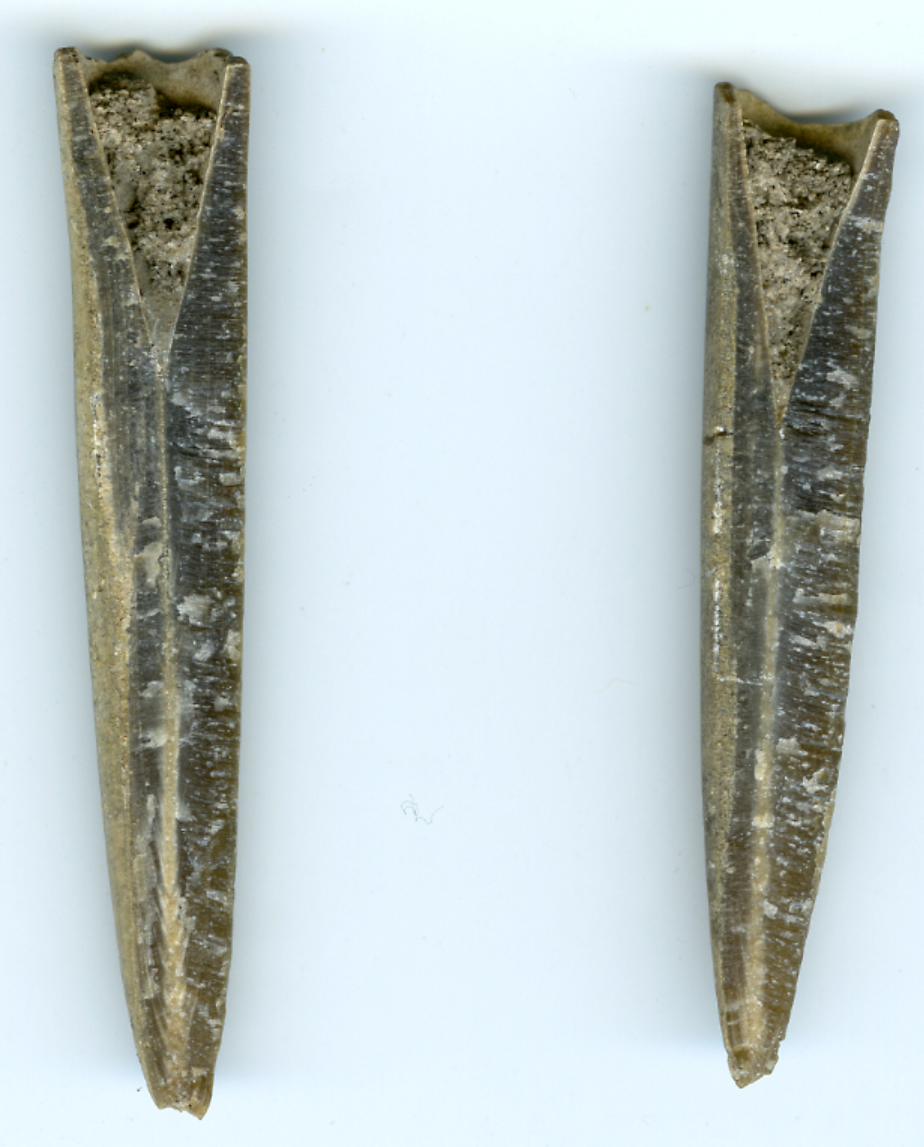
Belemnites are the fossilized rostra of extinct species of cephalopod. They were called thunderstones or thunderbolts because they were believed to have descended from the heavens during storms. An early Jurassic belemnite from Normandy, France is pictured.
The "transparent fragment from Hungary" might have been hyalite, a transparent form of opal with a glassy lustre.
The donor was a man named Frey, of Basel, Switzerland. He may have met Du Simitière during miltary campaigns in Flanders. The men corresponded and exchanged natural history specimens in 1765 and 1766. Frey's covering letter for his shipment of fifty fossils and other natural history specimens was dated at Basel, 1 Oct 1766. Du Simitière Papers, Library Company of Philadelphia.