Object Status:
Unlocated
Accession Date:
March 25, 1806
Primary Source Reference:
Thomas Jefferson to Charles Willson Peale, 6 Oct 1805; Selected Papers, 2, part 2: 894; Poulson's American Daily Advertiser (Philadelphia), 25 Mar 1806
Notes:
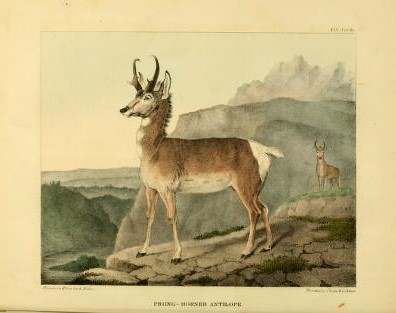
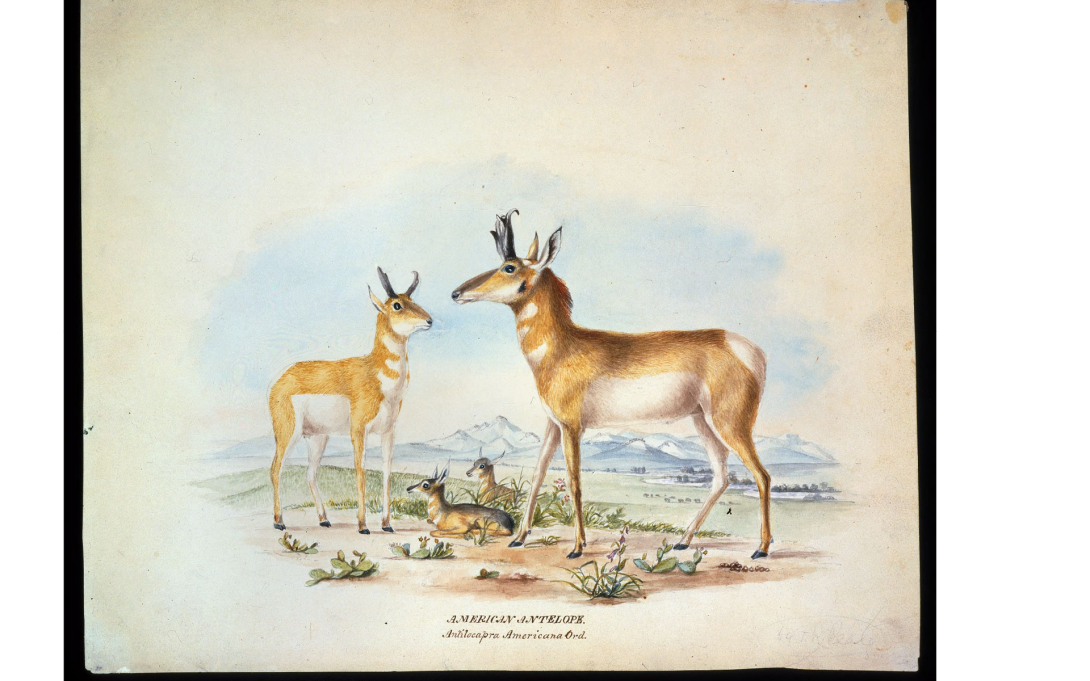
This animal, first described by Lewis and Clark, was the pronghorn (Antilocapra americana), a species of artiodactyl (even-toed, hoofed) mammal indigenous to interior western and central North America. Though not an antelope, it is often known colloquially in North America as the American antelope, prong buck, pronghorn antelope, prairie antelope, or simply antelope because it closely resembles the true antelopes of the Old World.
Lewis and Clark sent a shipment to Jefferson from Fort Mandan in April 1805 that included "a stuffed male and female antelope with their skeletons." Jefferson forwarded to Peale "Skins of the male & Female antelope with their skeletons," and Peale reported to Jefferson (3 Nov 1805) that the "several skins" would be valuable additions to his Museum even though some parts of them were in bad condition "owing to the Moth & Dermest having made great havock." Joseph Mussulman, "Lewis and Clark's Pronghorn," http://www.lewis-clark.org/article/3383
Titian Ramsay Peale later depicted the pronghorn during his service with the Long Expedition, 1819-1820. The Peale's Museum specimen was also used as the basis for a lithograph by A. Ryder, in Thomas Doughty, Cabinet of Natural History and American Rural Sports, vol. 3 (Philadelphia, 1833), pp. 49-51, plate 5.
Specimen Type:
Dead/preserved
Peale's Common Name:
Anterlope
Current Common Name:
Pronghorn
Current Scientific Name
Antilocapra americana