Object Status:
Unlocated
Accession Date:
August 23, 1788
Primary Source Reference:
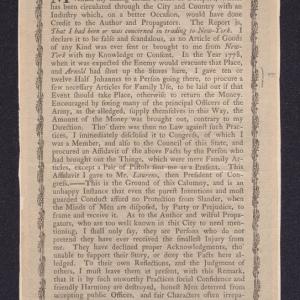
Pennsylvania Packet (Philadelphia), 23 Aug 1788
Additional Source Text:
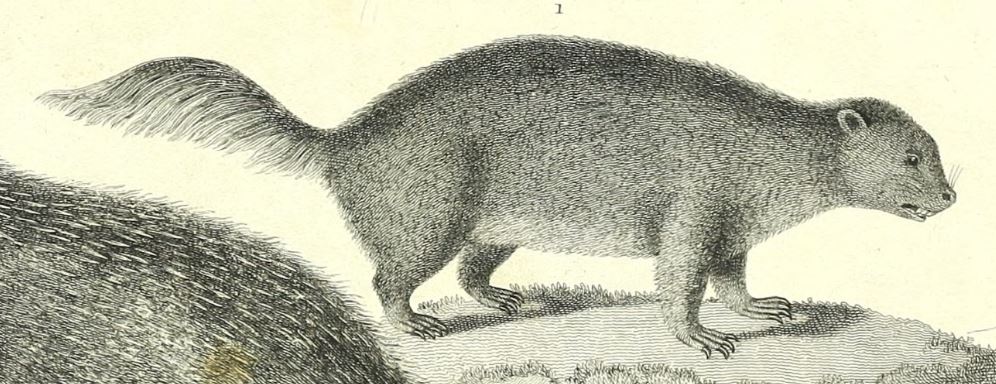
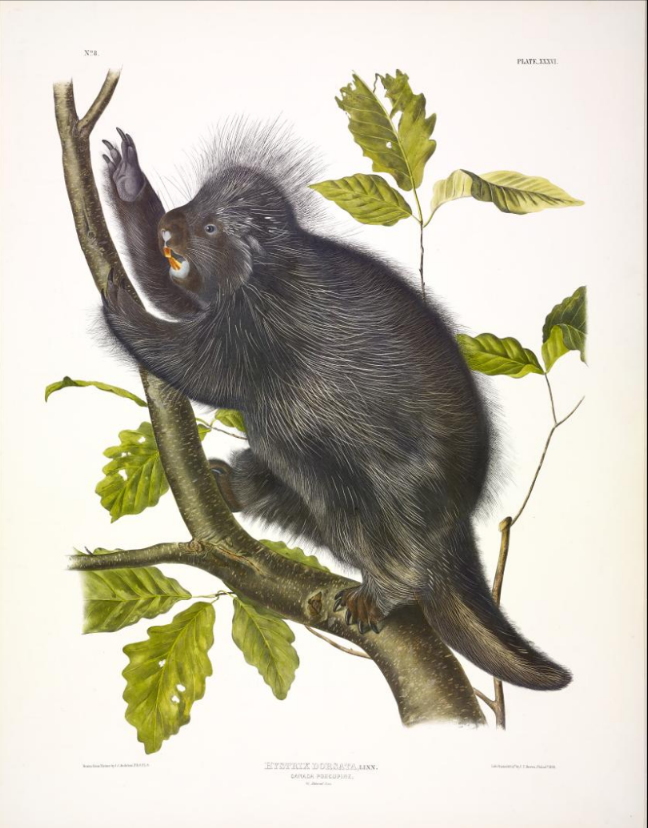
In his Natural History Lecture No. 6 (1799), Academy of Natural Sciences of Drexel University, Peale wrote: "This is the American Porcupine. It is the Histrix dorsata of Linnaeus. The largest quills were pulled out before I could put it under glass, yet it is far from being unfurnished with them under those coarse hairs. It is found in the western parts of Pennsylvania, in Canada and as far north as Hudsonsbay. It carefully avoids getting wet, and drinks or laps like the Dog.
"I have one alive (It died the third of March 1801), and I find that it also drinks but seldom. It is not so voracious an Animal as the African Porcupine; it is more delicate in its choise of food; it seems to prefer Chesnuts to all other food. I have been obliged to feed it in default of nuts with bread & Apples.
"The manners of the American Porcupine is widely different from the African, this does not attempt to knaw its cage, and the other will not be confined by wood unless it is entirely covered with metal. This is quiet, gentle and timid. Some of its actions are singular; it will stand on its hind, with its fore feet against the cage, lifting first one foot than the other in a sort of dancing fashion for hours together with some short intermissions. I have seen it playful on some Evenings when the moon shone bright, from which I suppose it may be most active at Night, which is not uncommon with many wild animals.
"The Indians make use of the skin, after taking out the quills, which serve them as Pins and needles. Its food is the bark of the Juniper Tree.
"So that this harmless Animal is useful to Man in several points of view. His flesh is both wholesome and pleasant; the quills to ornament & strengthen our garments; and the skin making good leather for various uses.
"I have critically examined some of the quills and find them barbed at the point, hence they may be equally dreaded by its enemies, altho’ only 3 Inches in length, as those large quills of the European Porcupine; for having made a slight puncture in the flesh, the barb takes hold, and by the muscular motion of the animal wounded, are pressed forward still deeper & deeper into the flesh. This is not the case in these long quills, for they are perfectly smooth at their points."
In his "Walk through the Phil[adelphi]a Museum" (1805-1806), pp. 27-28, Peale wrote of the "American Porcupine (Hystrix Dorsata)": "These quills variously dyed, are used by the aborigenes of America to ornament their dresses &c. and although short, are more dangerous than the long ones of the crested Porcupine, for they are barbed whereas the points of the others are smooth."
Also listed in State Gazette of South Carolina (Charleston), 22 Sep 1788
Notes:
John D. Godman gave a lengthy description of the porcupine, likely based on a specimen in the Museum, in his American Natural History. Part I. Mastology, 3 vols. (Philadelphia, 1826-1828), 2: 150-154. He also described the many Native American objects made with porcupine quills in the Museum / https://hdl.handle.net/2027/dul1.ark:/13960/t3wt2j207?urlappend=%3Bseq=…
Capt. (later Major) William Ferguson of the U.S. Artillery was killed at the Battle of the Wabash (St. Clair's Defeat) on 4 Nov 1791. Charles Beatty Alexander, Major William Ferguson: Member of the American Philosophical Society, Officer in the Army of the Revolution and in the Army of the United States (New York, 1908)
Specimen Type:
Live (presumably eventually taxidermied/preserved)
Peale's Common Name:
Porcupine
Peale's Scientific Name:
Histrix dorsata of Linnaeus
Current Common Name:
North American porcupine
Current Scientific Name
Erethizon dorsatum