Object Status:
Unlocated
Accession Date:
April 13, 1799
Primary Source Reference:
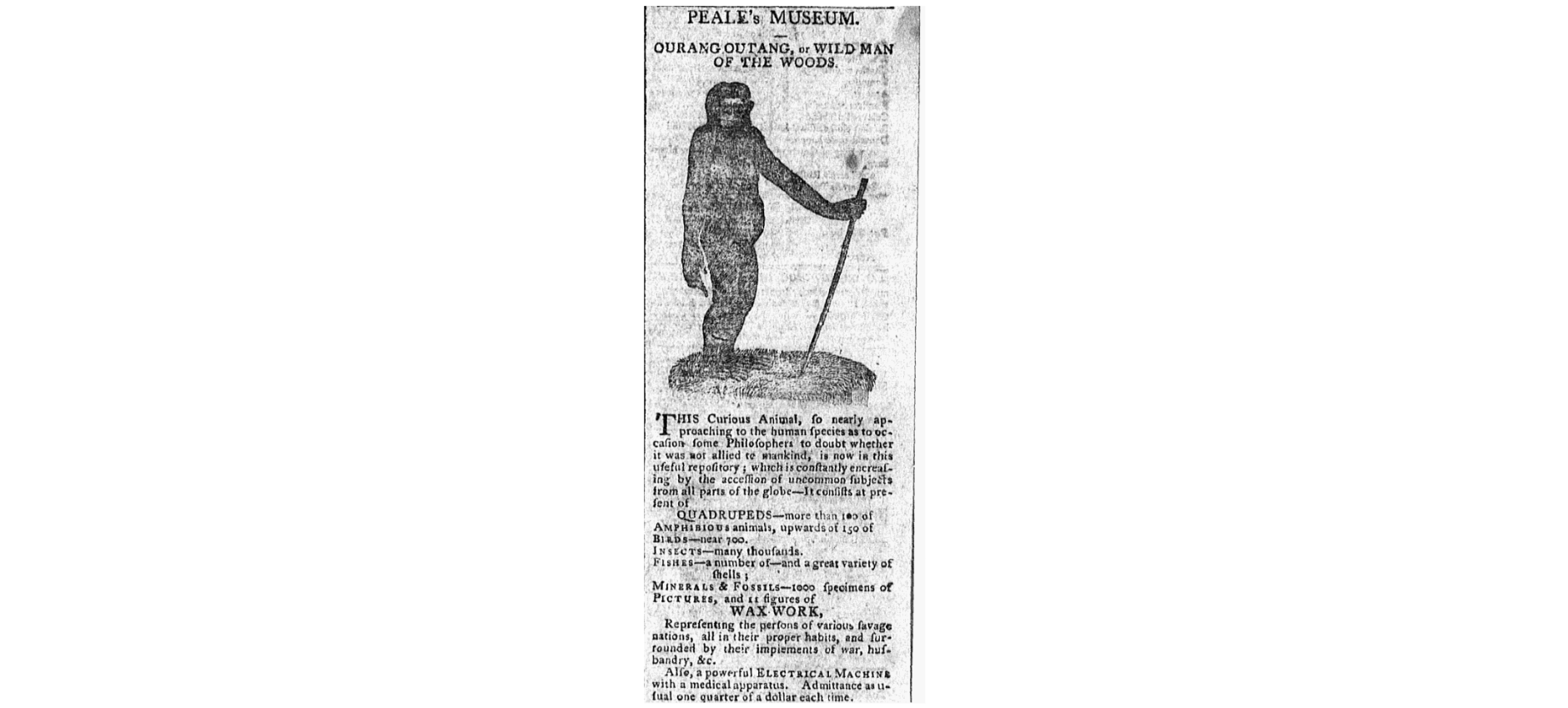
Claypoole’s American Daily Advertiser (Philadelphia), 13 Apr 1799
Additional Source Text:
"This Curious Animal, so nearly approaching to the human species as to occasion some Philosophers to doubt whether it was not allied to mankind, is now in this useful repository."
In his Walk through the Museum (1805), pp. 7-8, Peale wrote: "Next to man is this Oran-outang. This is the name given it by the malays -- it claims our first attention -- how like an old Negro? -- erect and holding a staff in its right hand -- This support is more necessary to this Animal than to man, for its feet rather resemble hands, and the want of sufficient projection of the heal-bone it is more unsteady in the erect position. The Anatomy of this Animal differs principally from that of man in the greater length of the Arms; a peculiarity well adapted to its habits of climbing; fruit being its chief support. It is said that they have a sort of drum in their throat which totally prevents them from articulating sounds like the human voice."
In his Natural History Lecture No. 1 (Academy of Natural Sciences of Drexel University), Peale wrote "The Orang outang, or as it is interpreted, Wild Man of the Wood, here presented to your view is a young one. It was brought into Baltimore alive last spring, where it lived only a short time, for, by the neglect of a negro boy to keep the Room where it was exhibited sufficiently warm, it caught cold, and soon after died. Yet the time it lived there, evinced to many spectators the possession of strong mental powers. I have the testimony of several persons who have seen it living, that it was mild in its manners, gentle in its movements, and very affectionate to its keeper. On receiving a cup of milk from him, after drinking the milk, she would carry the cup to the other side of the Room to put it on a Table, then return and kiss its masters hand. She would lay a blanket on the floor and take another covering and cover itself with it. How widely different this from the manners of the Monkey, for as soon as they have emptied a Cup by drinking the contents, they let it fall and it is broken, nor have any, that I have seen, had the sagacity to use covering in order to keep themselves warm. She walked erect, except when sick or too weak to support itself with ease. I am also told that it possessed a considerable share of Modesty."
Notes:
This animal was received alive in Baltimore, but died shortly thereafter and was presumably displayed in Philadelphia as a preserved specimen.
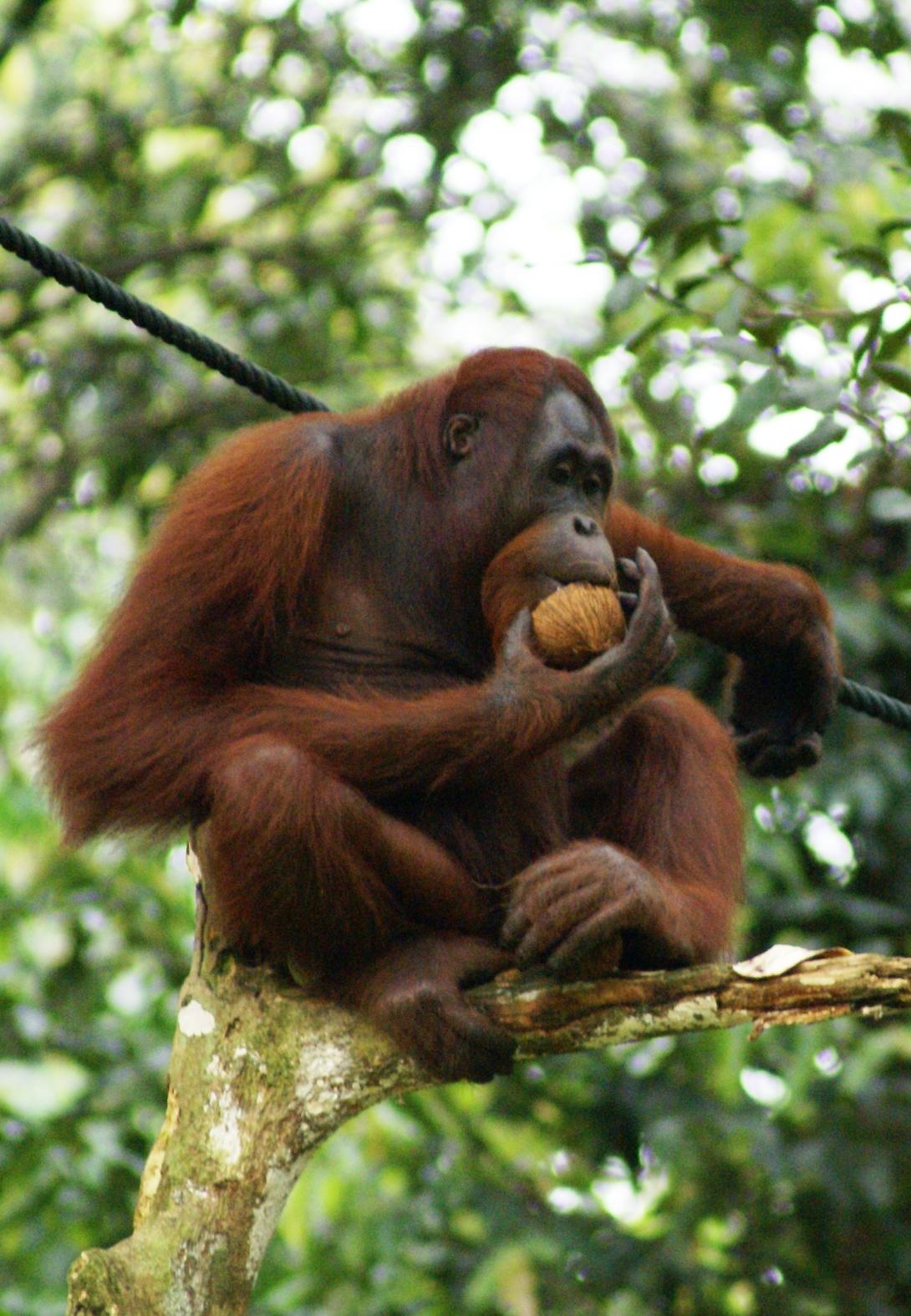
Orangutans are great apes native to the rainforests of Indonesia and Malaysia. There are now three recognized species in the genus Pongo: the Bornean orangutan (P. pygmaeus, with three subspecies), the Sumatran orangutan (P. abelii), and the Tapanuli orangutan (P. tapanuliensis),
Specimen Type:
Dead/preserved
Peale's Common Name:
Ourang-outang
Current Common Name:
Orangutan