Object Status:
Unlocated
Accession Date:
October 11, 1816
Primary Source Reference:
Peale Museum Accessions Book, Historical Society of Pennsylvania, p. 81
Additional Source Text:
"Taken from the tree which is deposited in the Tower of London June 5th 1804."
Notes:
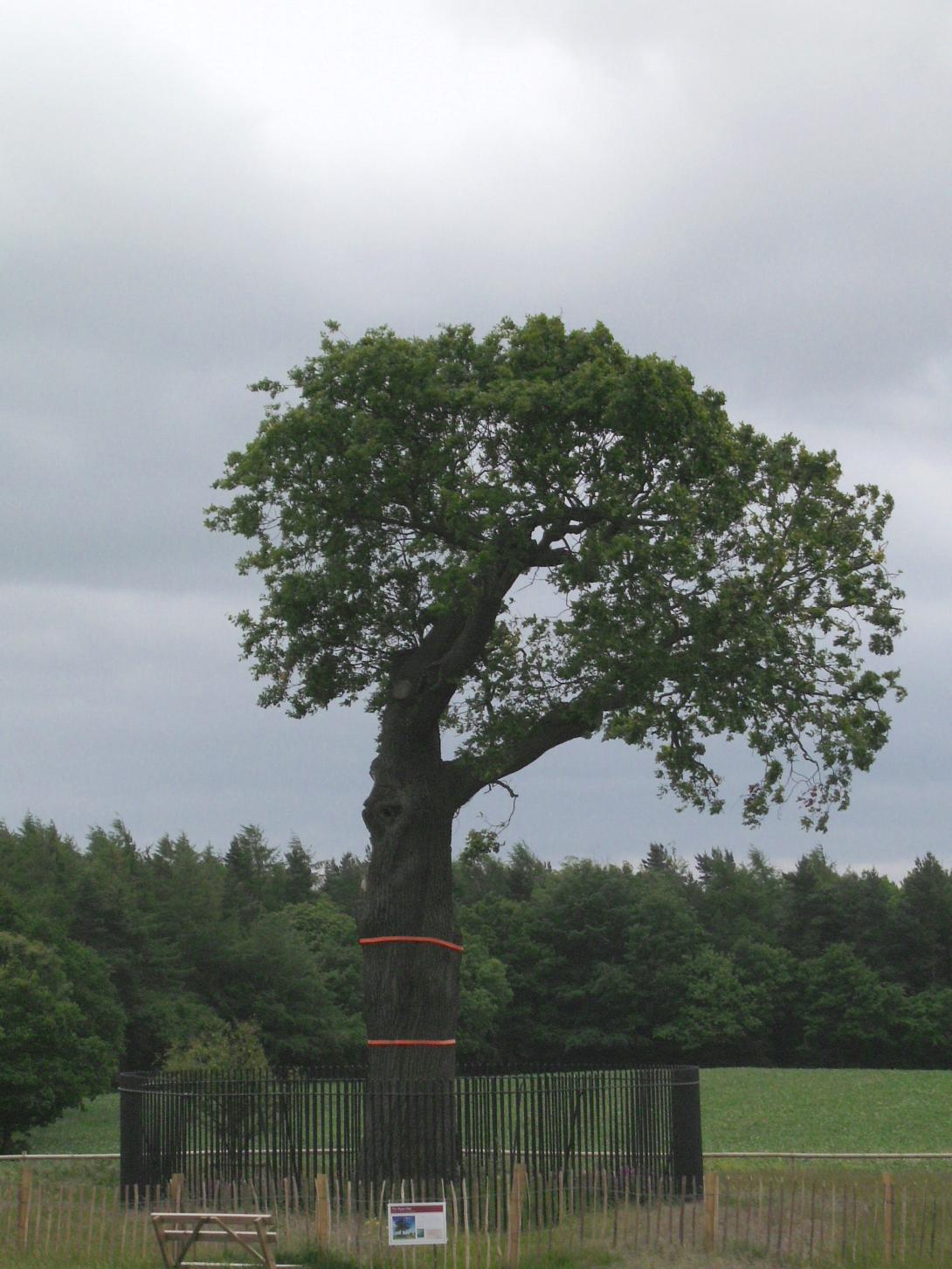
"The Royal Oak is the English oak tree within which the future King Charles II of England hid to escape the Roundheads following the Battle of Worcester in 1651. The tree was in Boscobel Wood, which was part of the park of Boscobel House. Charles told Samuel Pepys in 1680 that while he was hiding in the tree, a Parliamentarian soldier passed directly below it. The story was popular after the Restoration, and is remembered every year in the English traditions of Royal Oak Day. . . . The tree standing on the site today is not the original Royal Oak, which is recorded to have been destroyed during the seventeenth and eighteenth centuries by tourists who cut off branches and chunks as souvenirs." Wikipedia, s.v. Royal Oak
Pictured here is a descendant of the original tree.
The donor was probably Philadelphia merchant Horatio Mann (d. 1843 or 1844), who owned property on Prince Edward Island / http://www.gov.pe.ca/paroatom/index.php/horatio-mann-fonds-1820-1843