Object Status:
Unlocated
Accession Date:
March 23, 1821
Primary Source Reference:
John D. Godman, American Natural History. Part I. Mastology, 3 vols. (Philadelphia, 1826-1828), 1: 265-266 / https://hdl.handle.net/2027/dul1.ark:/13960/t4wh6dv4h?urlappend=%3Bseq=…
Additional Source Text:
"A well prepared specimen in the Philadelphia Museum."
Notes:
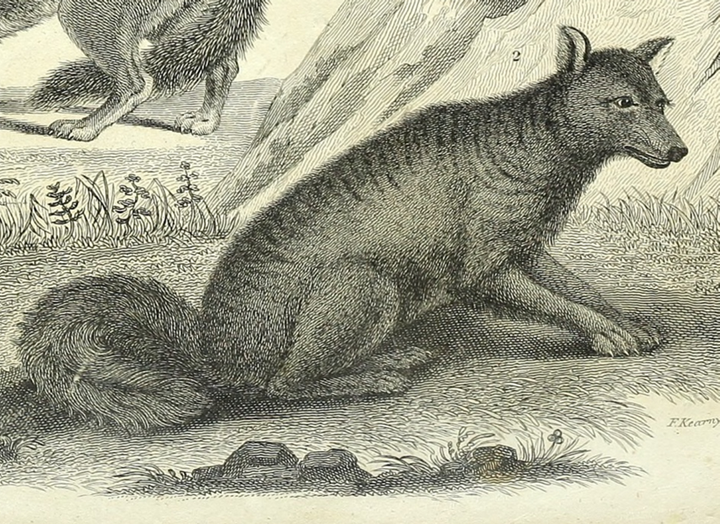
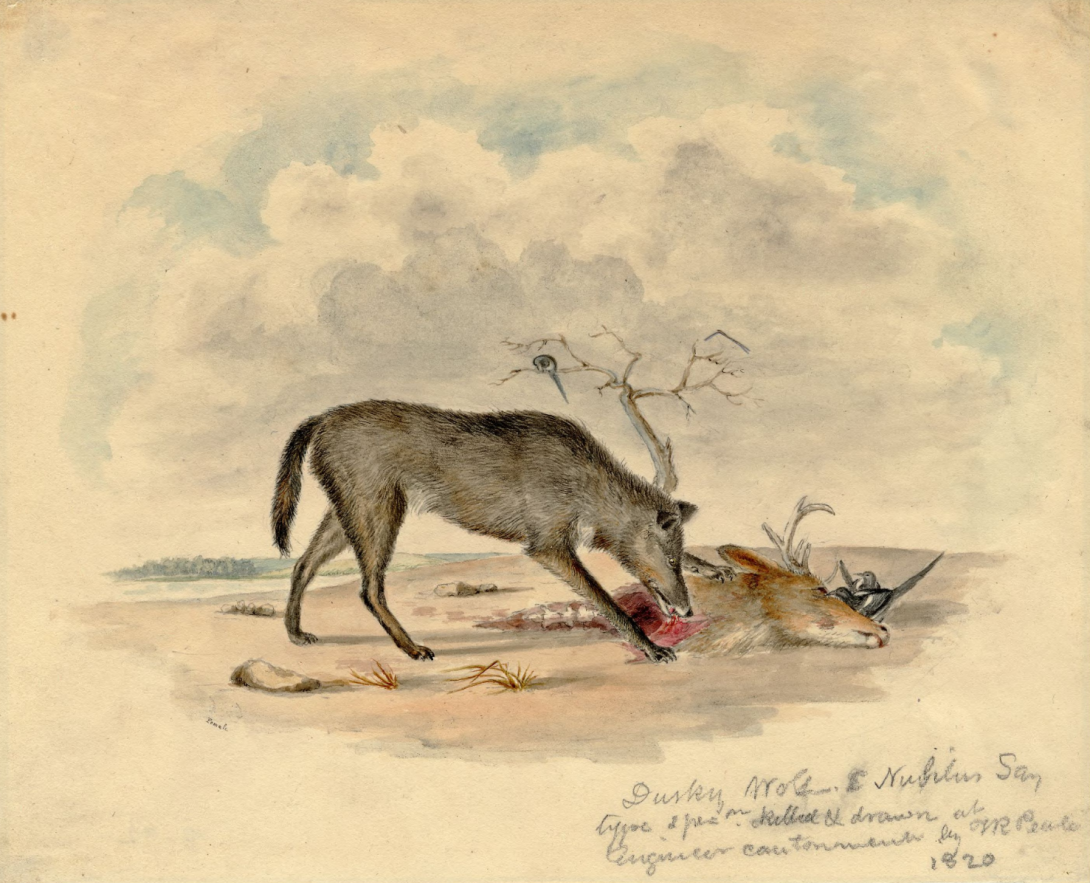
Titian Ramsay Peale executed a watercolor of Canis nubilus while engaged on the Long Expedition, 1819-1821. What he called the dusky wolf (and which Thomas Say designated <em>Canis nubilus</em>), is now thought to have been <em>Canis lupus nubilus</em>, an extinct subspecies of the gray wolf that once extended throughout the Great Plains, from southern Manitoba and Saskatchewan in Canada southward to northern Texas in the United States. The subspecies was declared extinct in 1926.
Say's description was published in Edwin James, Account of an Expedition from Pittsburgh to the Rocky Mountains, Performed in the Years 1819 and '20, by Order of the Hon. J.C. Calhoun, Sec'y of War: Under the Command of Major Stephen H. Long. From the Notes of Major Long, Mr. T. Say, and other Gentlemen of the Exploring Party, 2 vols. (Philadelphia, 1823), 1: 169 / https://archive.org/details/accountofexpedit01jame/page/168/mode/2up
Richard Harlan also described this species in Fauna Americana: Being a Description of the Mammiferous Animals Inhabiting North America (Philadelphia, 1825), pp. 84-86 / https://www.biodiversitylibrary.org/page/3194407
Peale contributed numerous other zoological specimens from the Long Expedition to the Museum on 23 March 1821, which date has been assigned to this specimen.
Specimen Type:
Dead/preserved
Peale's Common Name:
Dusky wolf
Peale's Scientific Name:
Canis nubilus Say
Current Common Name:
Great Plains wolf, dusky wolf
Current Scientific Name
Canis lupus nubilus