Object Status:
Unlocated
Accession Date:
By 1822
Primary Source Reference:
Thomas Say, "On a Quadruped, belonging to the Order Rodentia," Journal of the Academy of Natural Sciences of Philadelphia, vol. 2, part 2 (1822): 330-343 / https://www.biodiversitylibrary.org/page/36831520
Additional Source Text:
A "prepared skin" is "in the valuable collection of the Philadelphia Museum. . . . It was brought to the museum more than twenty years ago, either from South America or one of the West Indian islands. . . . More recently a living specimen of the same animal was presented to the museum."
Notes:
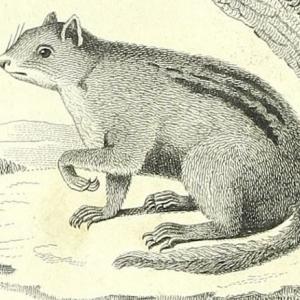
What Say designated Isodon pilorides is now known as Desmarest’s hutia (Capromys pilorides), a rodent endemic to Cuba and its associated islands.
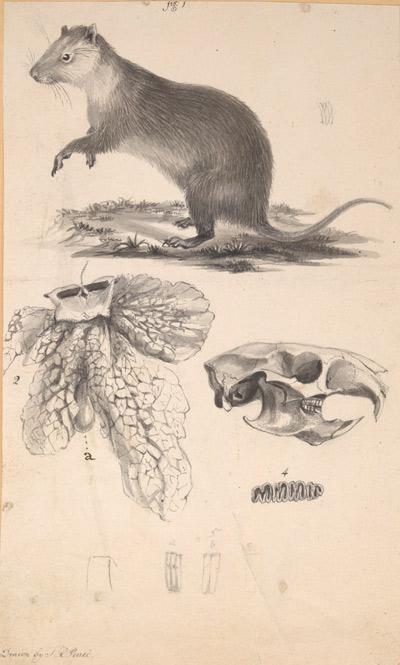
Titian Ramsay Peale's drawing used as the basis for the plate accompanying Say's article is pictured here.
Specimen Type:
Living/Live (presumably eventually taxidermied/preserved)
Peale's Common Name:
Long-tailed cavy (Say's name)
Peale's Scientific Name:
Isodon pilorides (Say's name)
Current Common Name:
Desmarest’s hutia
Current Scientific Name
Capromys pilorides