Object Status:
Unlocated
Accession Date:
By 1799
Primary Source Reference:
Natural History Lecture No. 5 (1799), Academy of Natural Sciences of Drexel University
Additional Source Text:
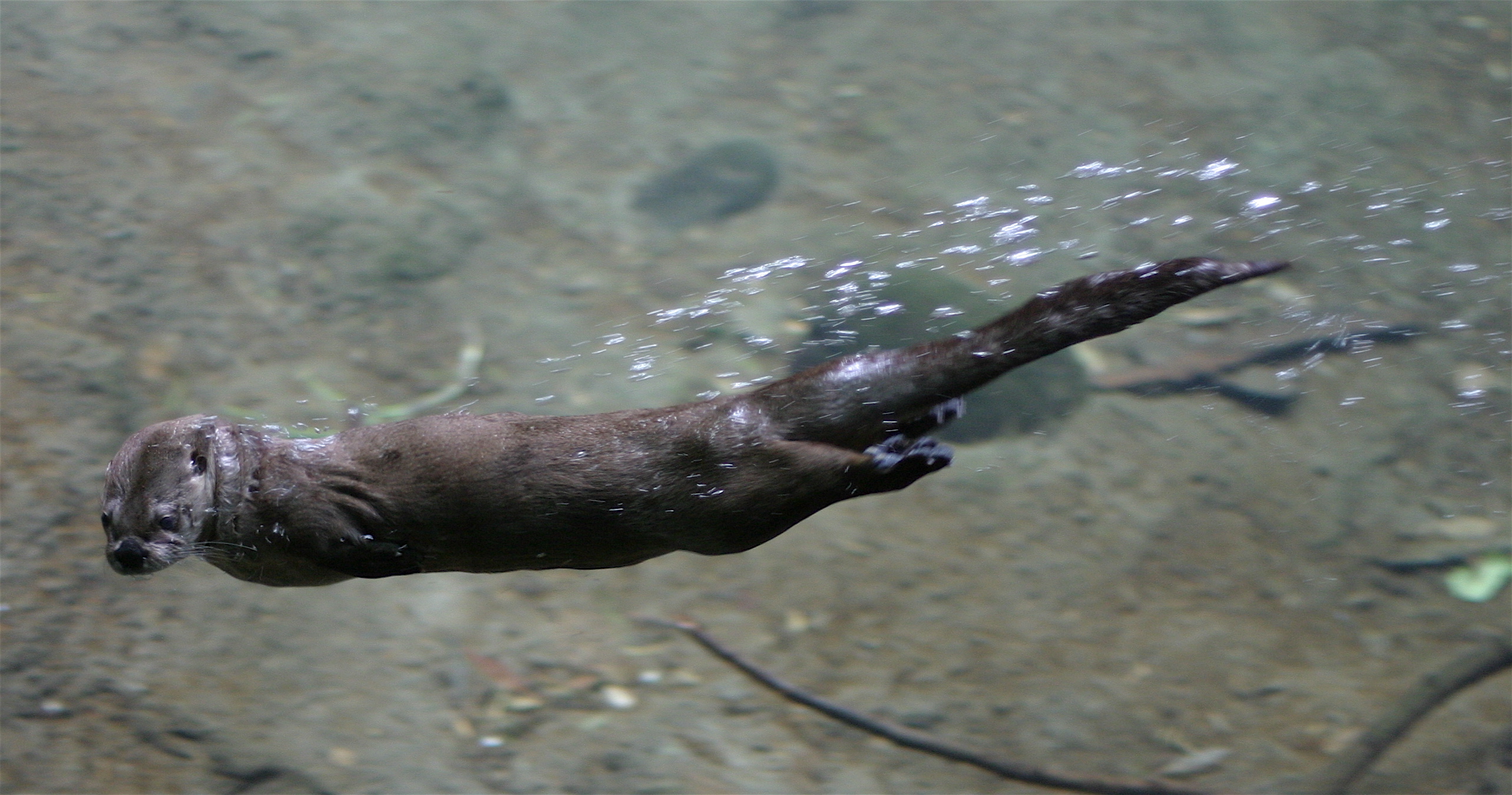
In his Natural History Lecture No. 5 (1799), Academy of Natural Sciences of Drexel University, Peale wrote: "The Animal before us is not a full grown Otter. They are frequently caught 4 feet long, independent of the Tail, which is thick at the insertion and tapers off to a Point. The Colour generally of this dark brown Colour & lighter on the underside. The fur is fine but short – The hair is glossy, and forms a fine shining coat, and the skins are valuable for exportation. There are an abundance of these Animals in most the United States, as well as in Canada. …
"The Otter shows sagacity in forming its habitation. It burrows underground on the banks of some river or lake. It always makes the entrance of its hole under water; working upwards to the surface of the earth and forming, before it reaches the top, several holes or lodges, that in case of high floods, it may have a retreat; for no Animal affects lying drier at top: it makes a minute orifice for the admission of Air. It is further observed, that this Animal, the more effectually to conceal its retreat, contrives to make even this little air-hole in the middle of some bush. They are also capable of being tamed: and he will follow his Master like a dog, and will even bring out Ducks or other Game shot or wounded in the Rivers, after some pains have been taken to educate him. I have known one instance of a tame Otter that remembered a person who had used to play with it after an absence of two weeks, when by jumping up and fondling it, showed evident expressions of Joy. I have seen one so tame as to become very troublesome in a family. They are fond of playing with Dogs, & when in the water, not knowing that the dog could not stay long beneath it, were in danger of drowning, while receiving their caresses. Then the owner of the Otter wished to go home, the practice was to call the dog, and the otter would instantly quit the Water, and follow the Dogs."
In his "Walk through the Phil[adelphi]a Museum" (1805-1806), pp. 22-23, Peale wrote: "The largest of this genus [Mustella] is the Otter (Lutra). This is not a large one; they are frequently caught 4 feet long independant of the tail, which is thick at the insertion and tapers off to the point. The otter shows great sagasity in forming its habitation; it burrows in banks making the entrance under water. They are easily tamed, will follow their master, and may be taught to bring out of rivers, wounded Ducks or other game."
Charles Willson Peale, Autobiography: "Mr. Hugh[e]s gave [Charles Willson Peale] a live otter, so tame that it was very trouble-some, by pawing on those that pat[t]ed it." Selected Papers, 5: 146-147
Notes:
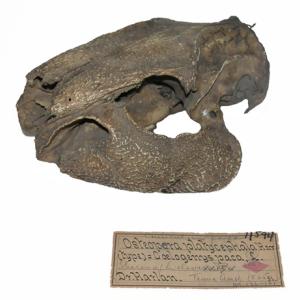
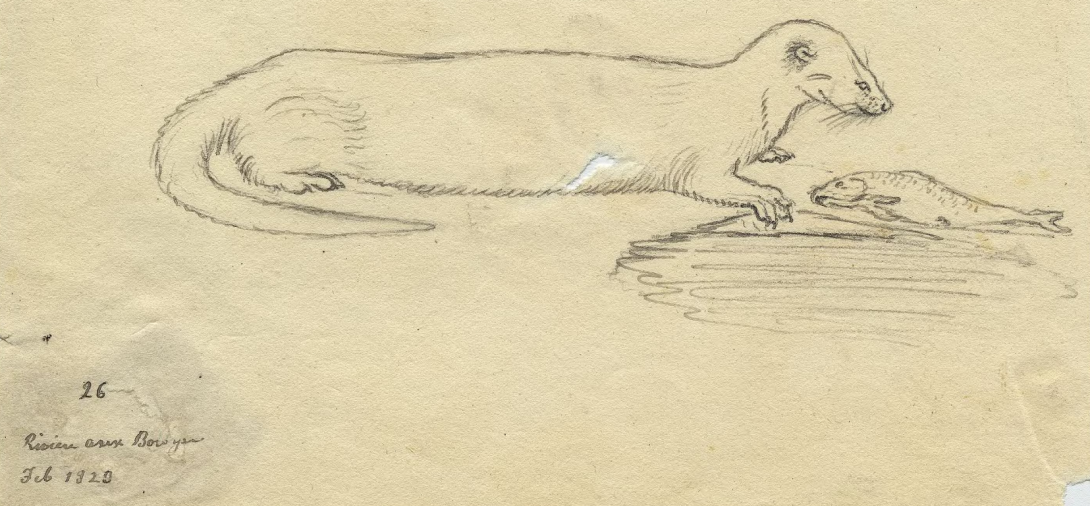
On 23 Mar 1823 (Peale Museum Accessions Book, Historical Society of Pennsylvania, p. 112) Titan Ramsay Peale gave to the Museum a specimen he prepared that he had acquired on the Long Expedition (his sketch is pictured here), and on 17 Dec 1821 the Museum received the skull of a sea otter, although Poulson's American Daily Advertiser (Philadelphia), 9 Jan 1822 reads "Head of the Fur Seal." Peale Museum Accessions Book, Historical Society of Pennsylvania, p. 118
Richard Harlan, in Fauna Americana: Being a Description of the Mammiferous Animals Inhabiting North America (Philadelphia, 1825), p. 72, identified a specimen of American otter from Delaware as No. 701 in the Philadelphia Museum / https://www.biodiversitylibrary.org/page/3194404
The donor was Col John Hughes (1759-1805) of Talbot County, Md.
Specimen Type:
Living/Live (presumably eventually taxidermied/preserved)
Peale's Common Name:
Otter
Peale's Scientific Name:
Lutra, Linn.; Loutre, Buff.
Current Common Name:
North American river otter
Current Scientific Name
Lontra canadensis