Object Status:
Extant
Accession Date:
Ca. 1795
Primary Source Reference:
Thomas Say, "On a Quadruped, belonging to the Order Rodentia," Journal of the Academy of Natural Sciences of Philadelphia, vol. 2, part 2 (1822): 330-343 (described on p. 338) / https://www.biodiversitylibrary.org/page/36831520
Richard Harlan, Fauna Americana: Being a Description of the Mammiferous Animals Inhabitating North America (Philadelphia, 1825), pp. 126-131 / https://www.biodiversitylibrary.org/page/3194373
Additional Source Text:
From Say: "A cranium of C[oelogenus] fulvus of F. Cuvier, in the Philadelphia museum, corresponds, in its remarkably eroded appearance, with that of the French museum, as described by that author."
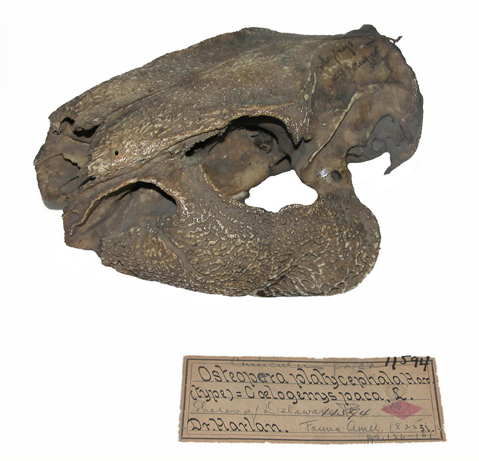
From Harlan: "Its skull was found more than thirty years ago on the shore of the river Delaware and presented to the Philadelphia Museum."
Notes:
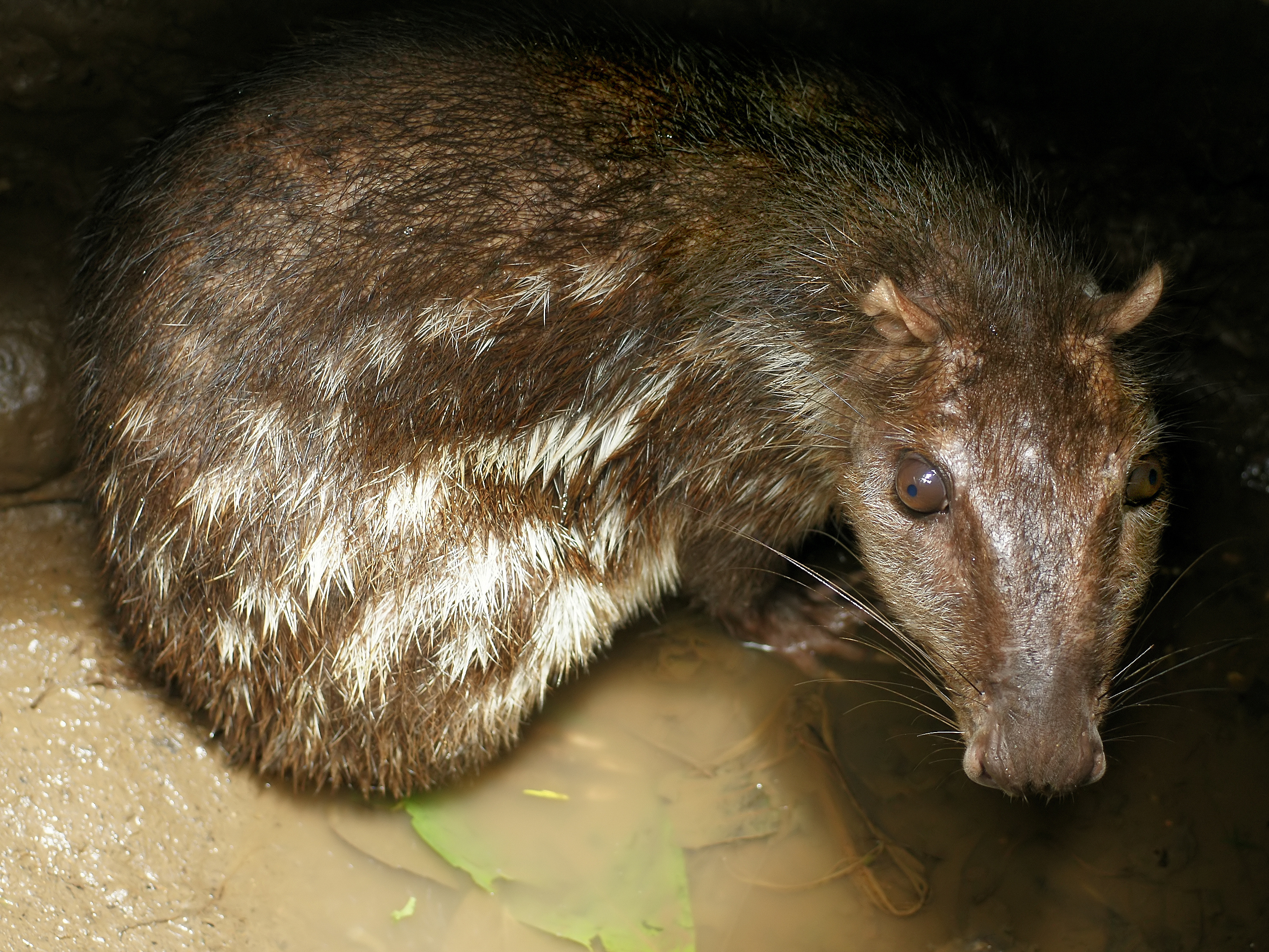
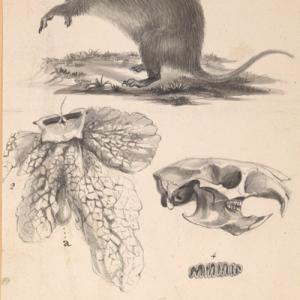
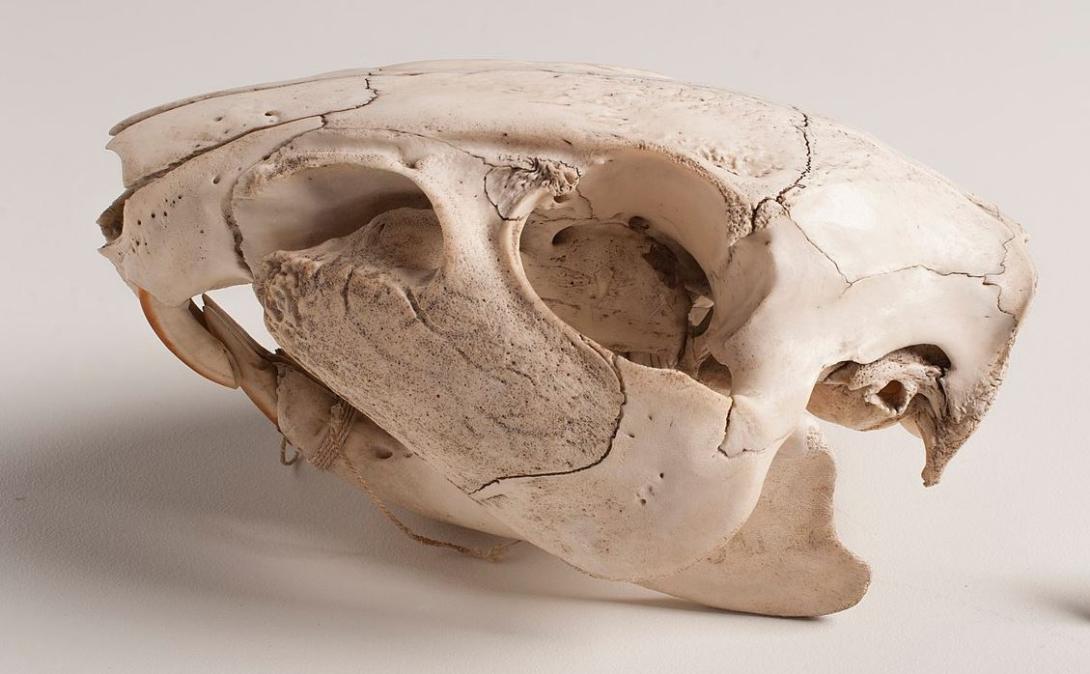
Richard Harlan, in Fauna Americana: Being a Description of the Mammiferous Animals Inhabiting North America (Philadelphia 1825), pp. 126-131, identified this skull as Osteopera platycephala. The paca is a ground-dwelling, herbivorous rodent found in South and Central America. "The skull [was] found along the banks of the Delaware River around 1795. . . . Thinking it was an entirely new kind of animal, [Harlan] named it Osteopera platycephala ('flat-headed pouch-bone'). He said it was a new genus and species of mammal, and it was known only by this unique skull. Harlan specially took note that 'This cranium has been frequently examined by the curious, and by them regarded as a lusus naturae [a trick of nature]. . . . Harlan] had not considered that a foreign animal may have been a shipboard pet or cargo, which wound up on the bank of the Delaware River either as an escapee or a dead body." The cranium is now in the collection of the Academy of Natural Sciences of Drexel University. A complete skull is also pictured here. Earle E. Spamer and Richard M. McCourt, article on "Seeking Living Mastodons" at http://www.lewis-clark.org/article/2744
Specimen Type:
Skeletons/skulls/bones
Peale's Common Name:
Paca (Harlan's name)
Peale's Scientific Name:
Coelogenus fulvus (Say's name)
Osteopera platycephala (Harlan's name)
Current Common Name:
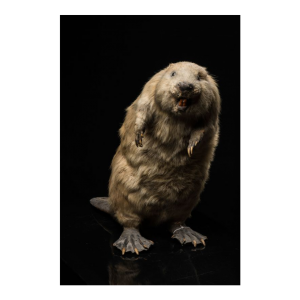
Paca
Current Scientific Name
Cuniculus paca