Object Status:
Extant
Accession Date:
By 1799
Primary Source Reference:
Charles Willson Peale, Lecture on Natural History 25. (ca. 1799). Academy of Natural Sciences of Drexel University Archives, coll. 40. / https://ansp.org/research/library/archives/0000-0099/coll0040/
Additional Source Text:
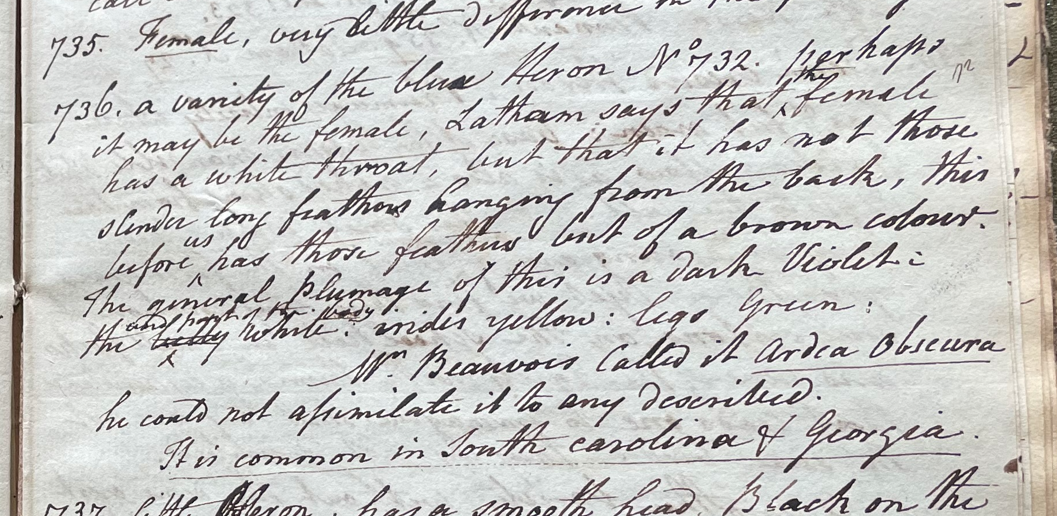
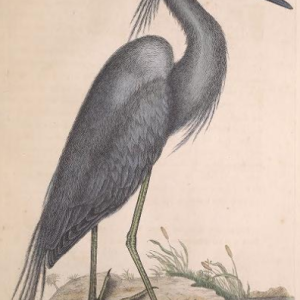
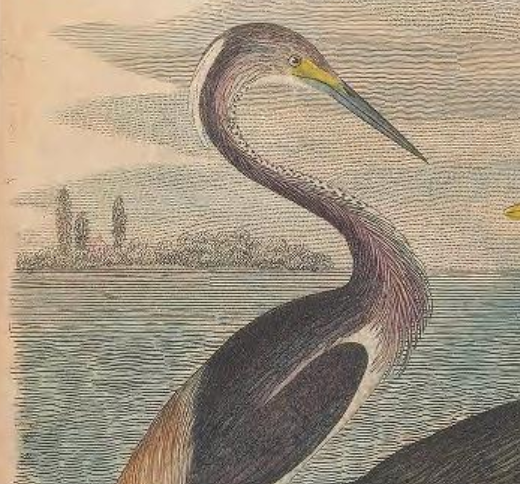
Charles Willson Peale (1741-1827) described a specimen, in his 25th Lecture (ca. 1799), which he considered a variety of Little Blue Heron (E. caerulea): "No. 736. A variety of the blue Heron No. 732. perhaps it may be the female, Latham says that the female has a white throat, but that it has not those slender long feathers hanging from the back; this [specimen] before us has those feathers but of a brown colour. The general plumage of this is a dark violet; the under parts of the body white; irides yellow; legs green. Mr. Beauvois called it Ardea obscura; he could not assimilate it to any described. It is common in South Carolina & Georgia." (Academy of Natural Sciences of Drexel University Archives, coll. 40)
Alexander Wilson (1766-1813) described this species under the name "Louisiana Heron / Ardea ludoviciana" in American Ornithology vol. 8, published posthumously (Pl. 64), where "Peale's Museum, No. 3750" was cited (Wilson 1814: 13). / https://www.biodiversitylibrary.org/item/175758#page/21/mode/1up (text) / https://www.biodiversitylibrary.org/item/175758#page/8/mode/1up (plate)
Notes:
Peale was incorrect about the color of the irides and legs, which in the Tricolored Heron are red and yellowish, respectively. He may have copied this misinformation from a description written by Palisot de Beauvois (1752–1820), a colleague from the Paris Museum, who may have given him the specimen.
Specimen Type:
Dead/preserved
Current Common Name:
Tricolored Heron
Current Scientific Name
Ardeidae | Egretta tricolor