Object Status:
Extant
Accession Date:
By 1799
Primary Source Reference:
Charles Willson Peale, Lecture on Natural History 21. (ca. 1799). Academy of Natural Sciences of Drexel University Archives, coll. 40. / https://ansp.org/research/library/archives/0000-0099/coll0040/
Additional Source Text:
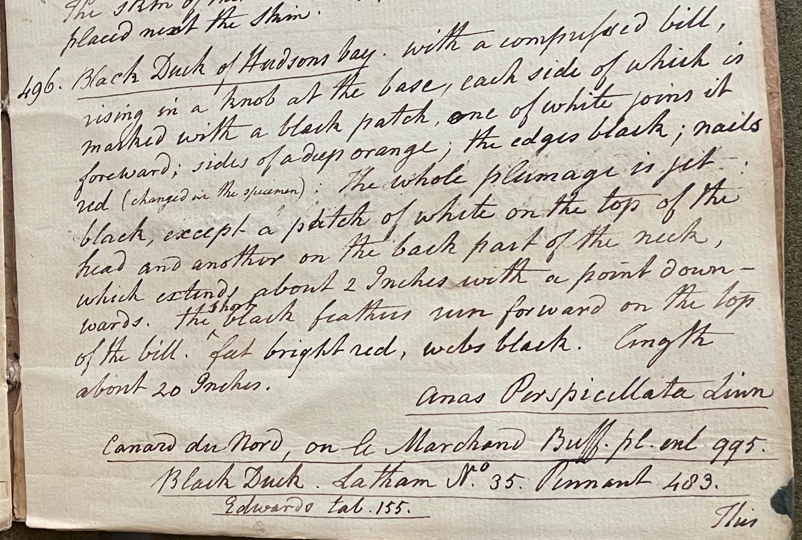
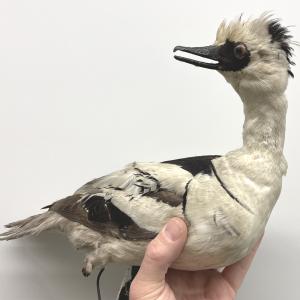
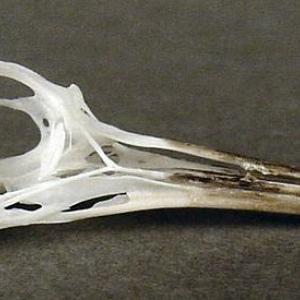
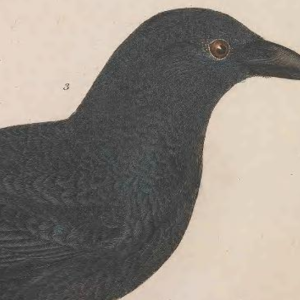
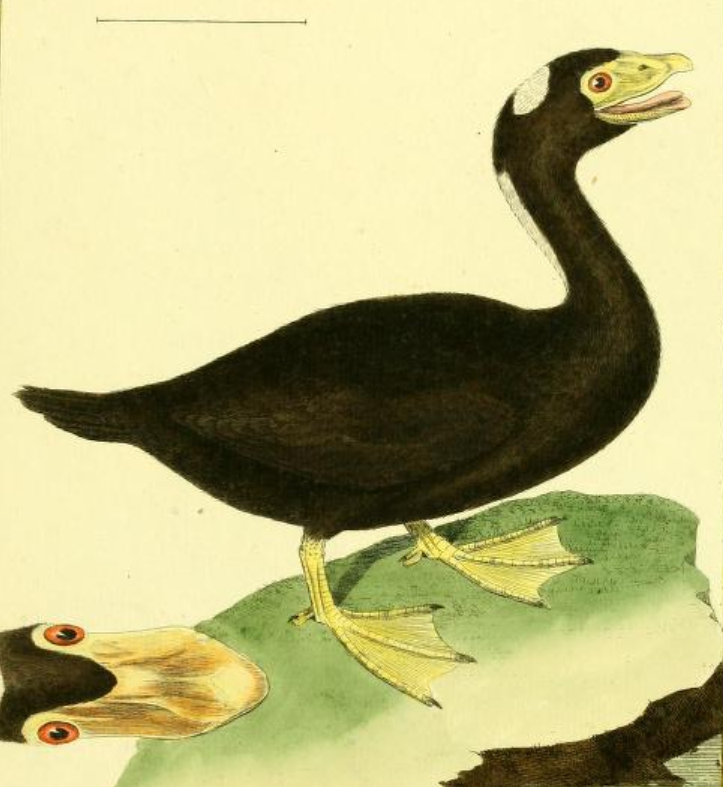
Charles Willson Peale (1741-1827) wrote, in his 21st Lecture (ca. 1799): "496. Black Duck of Hudsons Bay. with a compressed bill, rising in a knob at the base, each side of which is marked with a black patch, one of white joins it forwards; sides of a deep orange; the edges black; nails red (changed in the specimen); the whole plumage is jet black, except a patch of white on the top of the head and another on the back part of the neck, which extends about 2 Inches with a point downwards. The short black feathers run forward on the top of the bill; feet bright red, webs black. length about 20 Inches. Anas Perspicullata Linn. Canard du Nord, ou le Marchand Buff. pl. enl. 995. Black Duck. Latham No. 35. Pennant 483. Edwards tab. 155." (Academy of Natural Sciences of Drexel University Archives, coll. 40)
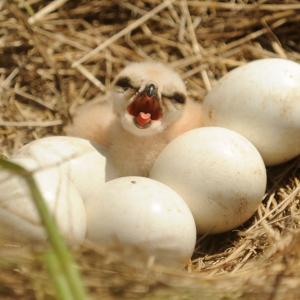
Peale continued: "This is wholly an American species. Breeds along the shores at Hudson's bay; and feeds on grass; it also makes its nest with the same, lined with feathers; and lays from 4 to 6 Eggs; hatches in July. In winter it is said to be found as far south as Carolina, and is very common at New York, where it is by some called the Coot. Our late navigators met with this in Prince William's sound. [A footnote inserted here indicates the information was sourced from "Cook Last Voyage ii. p. 378"]. 497. Female of the proceeding is a little smaller, of a sooty colour, and has no white spot on the top of the head or back of the neck; but the cheeks are marked with two dull white spots and a black spot on each side of the bill." An undated scrap of paper tucked into Peale's 21st lecture manuscript contains a scribbled list of duck specimens, including: "Black of Hudson's Bay (Perspicullata)" (ANSP Archives, coll. 40).
Peale wrote, in "A Walk Through the Philad[elphi]a Museum" (1805–1806): "The Scoter Duck (a. Nigra) and common wigeon (a. Penelope) came from Sweden, they differ from the American Scoter (and American Wigeon called the bald pate)" (Historical Society of Pennsylvania, coll. 0481).
Alexander Wilson (1766-1813) described this species under the name "Black, or Surf Duck / Anas perspicillata" in American Ornithology vol. 8, published posthumously (Pl. 67), where "Peale's Museum, No. 2788" was cited (Wilson 1814: 49). / https://www.biodiversitylibrary.org/item/175758#page/63/mode/1up (text) / https://www.biodiversitylibrary.org/item/175758#page/62/mode/1up (plate)
Specimen Type:
Dead/preserved
Current Common Name:
Surf Scoter
Current Scientific Name
Anatidae | Melanitta perspicullata