Object Status:
Unlocated
Accession Date:
February 7, 1791
Primary Source Reference:
Dunlap's American Daily Advertiser (Philadelphia), 7 Feb 1791
Additional Source Text:
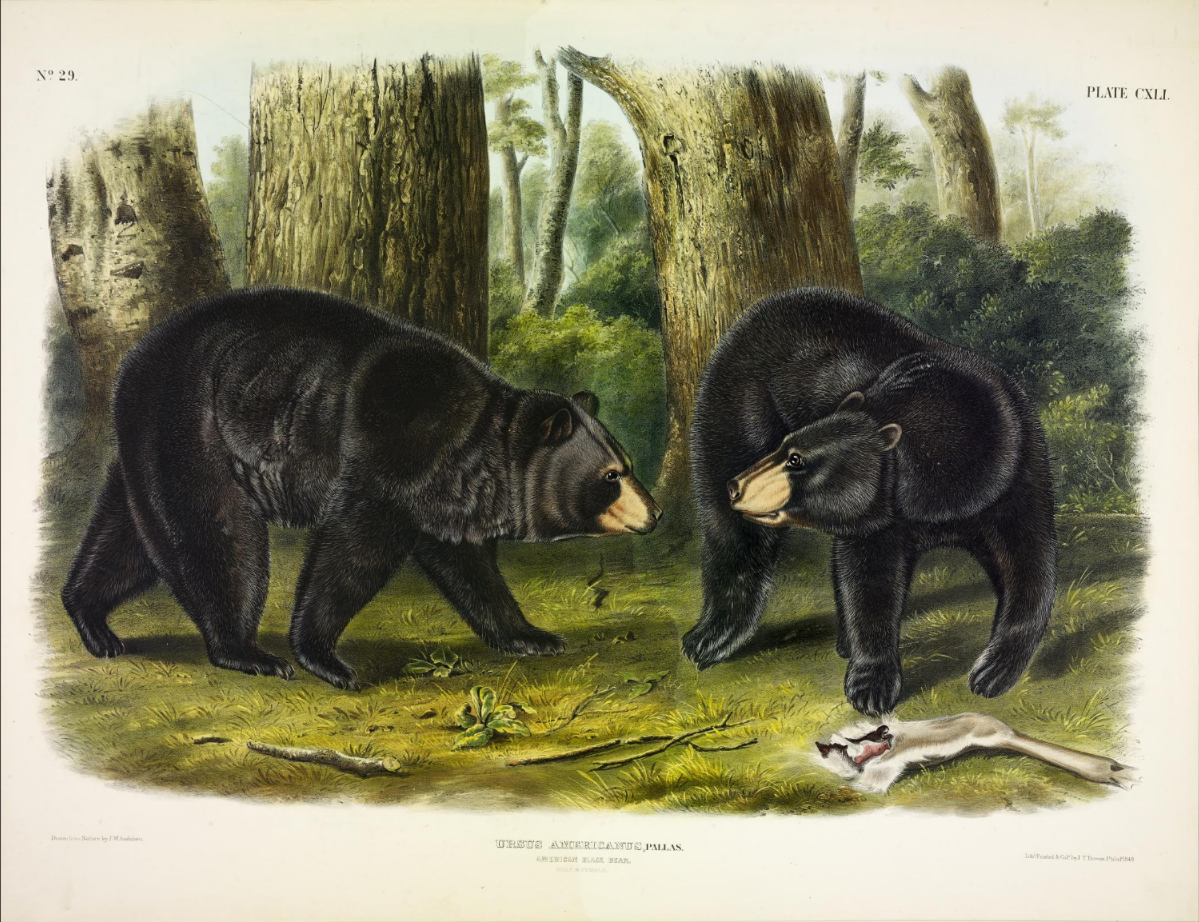
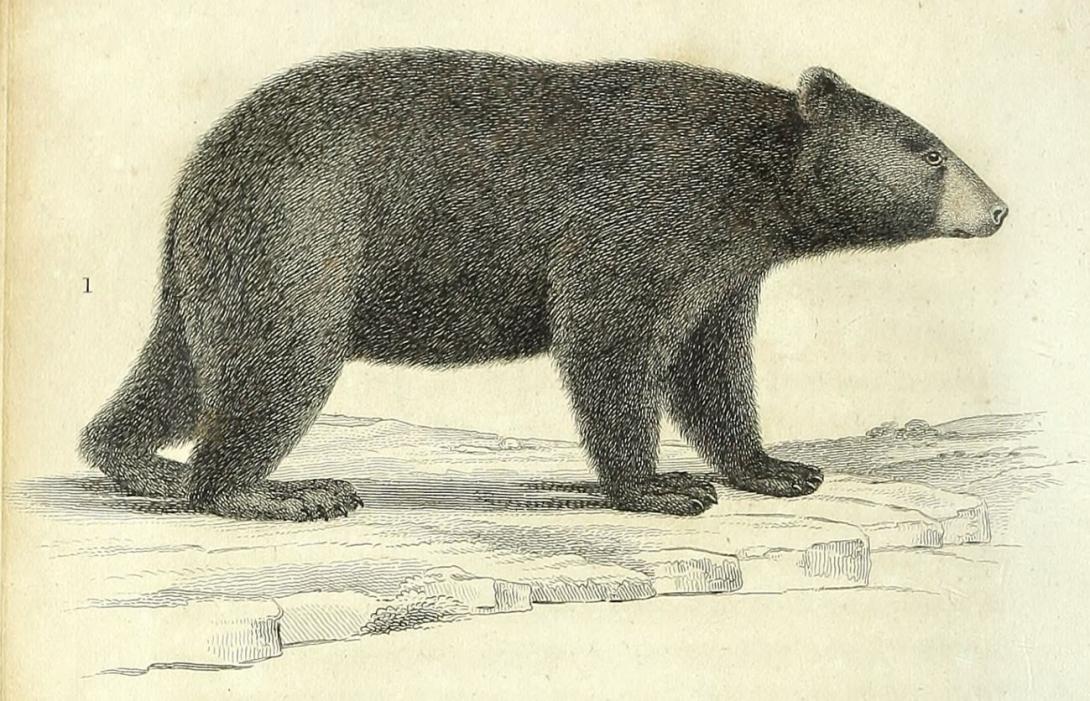
"The visage and limbs of this animal is much longer than the bears of the more northern parts of America."
In his Natural History Lecture No. 5 (1799), Academy of Natural Sciences of Drexel University, Peale wrote: "The black Bear of our Country form a distinct variety: they are said to be much smaller than the brown bear of Europe. The nose of ours is long and pointed, and of a yellowish brown colour, the coat very black and more smooth and glossy than that of the European kind. Bears strike with their fore feet, like the cat: they do not often use their mouths in fighting; but seizing the assailant with their paws, and pressing him against their breast, almost instantly squeeze him to death.
"The voice of the bear is a kind of growl, interrupted with rage, which is capriciously exerted; and although this Animal seems gentle and placid to its master, when tamed; yet it is still to be distrusted, and managed with caution, as it is often treacherous and resentful without cause.
"The bear is not only a savage, but a solitary Animal; he takes refuge in the most unfrequented parts, and the most dangerous precipices of uninhabited mountains. He chooses his Den in the most gloomy parts of the forest, in some cavern that has been hollowed by time, or in the hollow of some old enormous tree. Thither he retires alone, and passes a part of the winter without provisions, or without ever stiring abroad. He is not, however, entirely deprived of sensation, like the Dormouse, or the Marmot, but seems rather to subsist upon the exuberance of his former flesh and only feels the calls of appetite when the fat he had acquired in summer begins to be entirely wasted. I am rather inclined to think it fabulous that he sucks his paws and thereby gains nourishment.
"This would sit in a sulky mood with his head down between his legs. I was anxious one day when the season became cold to make him eat, and putting some corn into his mouth, he only angrily snapped at my hand. I was ever after cautious how I meddled with him."
Also listed in New-Hampshire Spy (Portsmouth), 23 Feb 1791
Notes:
Richard Harlan, in Fauna Americna, p. 51, based his description of this species, which he call Ursus americanus, on the specimen in the Museum / https://www.biodiversitylibrary.org/page/3194391
Harlan also donated a skull of a black bear to the Museum in 1822. Poulson's American Daily Advertiser (Philadelphia), 9 Jan 1822
John D. Godman described and illustrated the species in American Natural History. Part I. Mastology, 3 vols. (Philadelphia, 1826-1828), 1: 114-130 / https://hdl.handle.net/2027/dul1.ark:/13960/t4wh6dv4h?urlappend=%3Bseq=133
Specimen Type:
Live (presumably eventually taxidermied/preserved)
Peale's Common Name:
Bear
Current Common Name:
Florida black bear
Current Scientific Name
Ursus americanus floridanus