Object Status:
Unlocated
Accession Date:
June 18, 1796
Primary Source Reference:
Claypoole's American Daily Advertiser (Philadelphia) 18 June 1796
Additional Source Text:
"A number of articles have been lately added to the Museum, besides those brought by my Sons from South Carolina; from among which I shall only mention one, extremely curious, which is a live Glass Snake. This snake appears to have been mistaken for what they call the Horn Snake, and is the tamest, most beautiful and quiet of those Animals I have ever seen, and if possible more harmless than the Black Snake."
In his letter of 10 June 1796 acknowledging receipt of the snake, Peale wrote to Tims that the snake was "a beautiful and curious Animal -- it has excited my curiosity to possess others of them, that I might have the opportunity of seeing their internal structure, which I am informed is equally curious." Selected Papers, 2, part 1: 149-150
Notes:
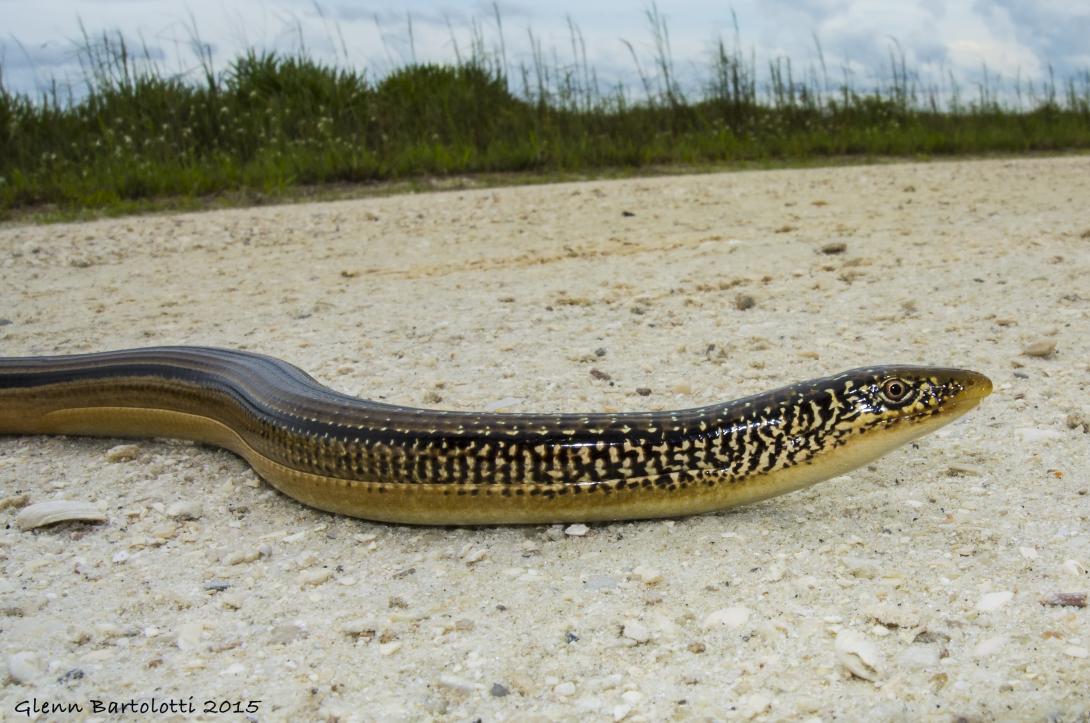
Ophisaurus (from the Greek 'snake-lizard') is a genus of superficially snake-like (i.e., legless) lizards in the family Anguidae. Several species are endemic to the southeastern United States, one of which, the island glass lizard (Ophisaurus compressus), is pictured here.
The animal was of interest to naturalists because it could voluntarily shed its tail when caught by a predator and then grow a new one.
The Museum had previously reported receiving a glass snake in Dunlap's American Daily Advertiser (Philadelphia) on 28 Aug 1792.
Thomas Tims resided at Ten Mile Hill in the Goose Creek district of South Carolina.
Specimen Type:
Live (presumably eventually taxidermied/preserved)
Peale's Common Name:
Glass snake
Current Common Name:
Island glass lizard
Current Scientific Name
Ophisaurus compressus