Object Status:
Unlocated
Accession Date:
January 22, 1808
Primary Source Reference:
Peale Museum Accessions Book, Historical Society of Pennsylvania, p. 28
Additional Source Text:
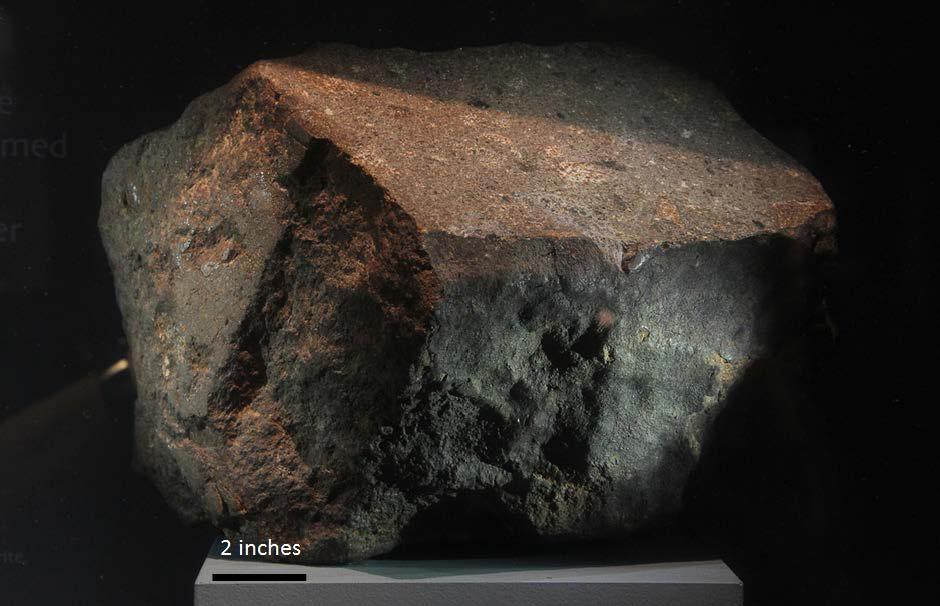
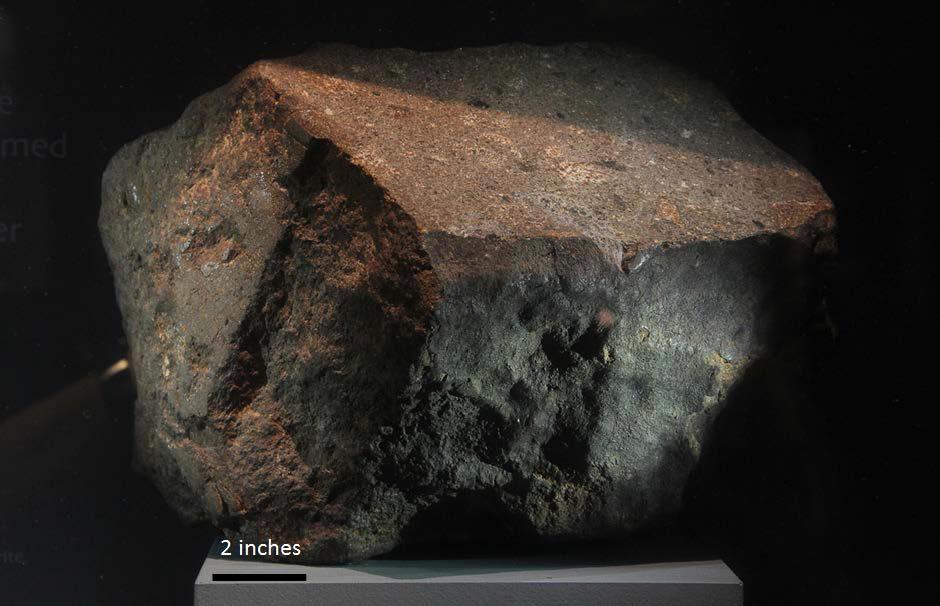
Poulson’s American Daily Advertiser (Philadelphia), 5 Feb 1808, reads: "Three small specimens of those extraordinary Stones, called 'Meteoric Stones,' which fell at Weston, Connecticut, Dec.14th, 1807, of which the news-papers have given lengthy accounts."
Notes:
The Yale Peabody Museum of Natural History provides this account: "At 6:30 on the morning of December 14, 1807, a blazing fireball about two-thirds the size of the moon was seen traveling southward by early risers in Vermont and Massachusetts. Three loud explosions were heard over the town of Weston in Fairfield County, Connecticut. Two or three days later Benjamin Silliman at Yale heard of it and with a colleague, James L. Kingsley, went to investigate, visiting everywhere stones had been reported and interviewing eyewitnesses. Fragments had fallen in at least 6 places. Several large pieces, including one of about 200 pounds (91 kilograms), had smashed on landing and others were smashed by the finders. Silliman and Kingsley came away with 'a considerable number of specimens.' Their account in the Connecticut Herald gave a detailed description of the fireball, the explosions heard more than 40 miles (64 kilometers) away, and the fall of the stones. It was quickly reprinted and a revised version—with a chemical analysis of the meteorite by Silliman, the first to be performed in the United States and among the first few in the world—was read before the American Philosophical Society in March 1808 and published the following year." / https://peabody.yale.edu/explore/collections/mineralogy-meteoritics/con…
Benjamin Silliman (1779-1864) was an American chemist and science educator.