Object Status:
Unlocated
Accession Date:
June 27, 1805
Primary Source Reference:
Peale Museum Accessions Book, Historical Society of Pennsylvania, p. 9
Additional Source Text:
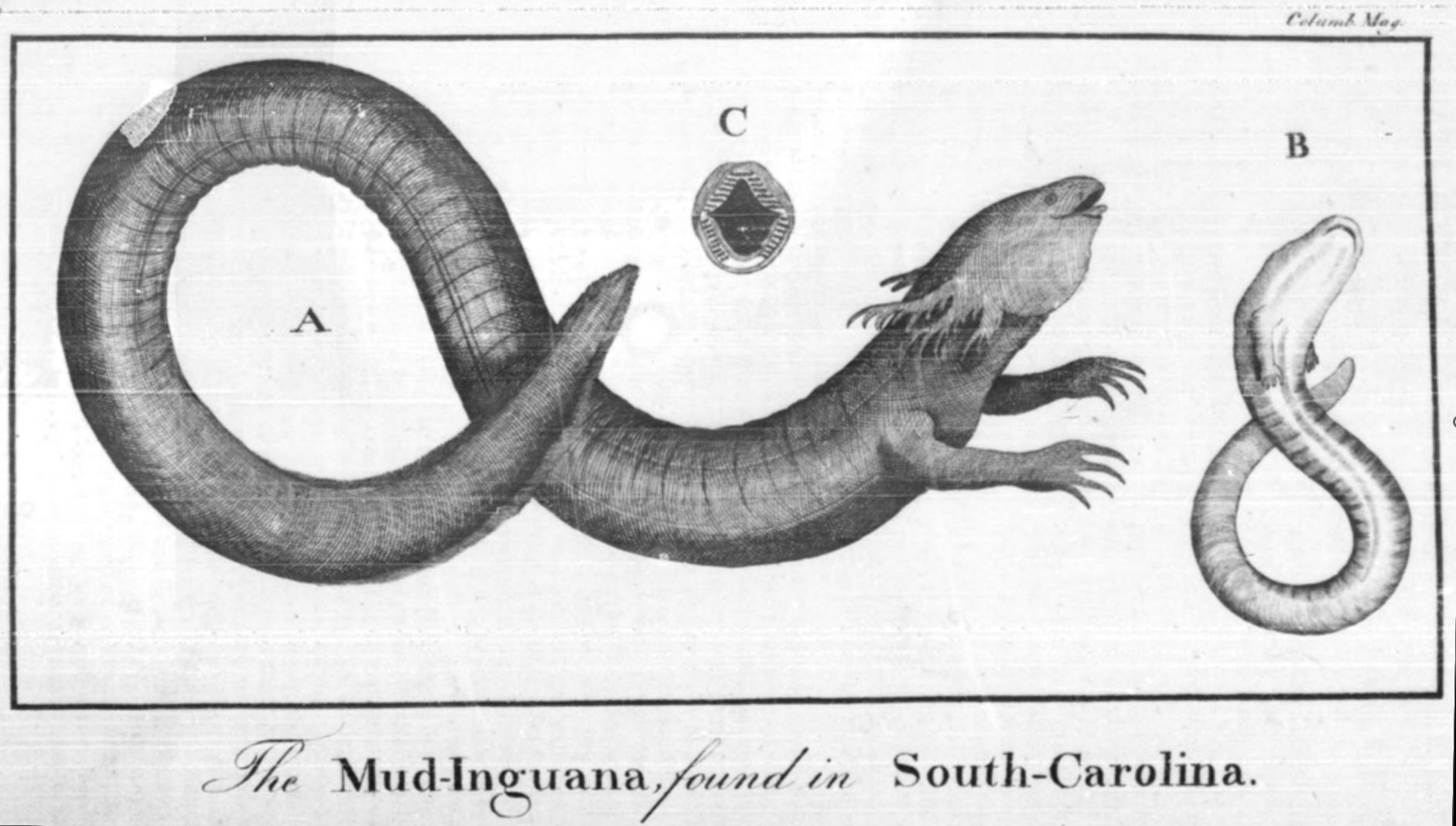
United States Gazette (Philadelphia), 7 Feb 1806 reads: "A living syren or mud inguana from Georgia. It is at present seen to advantage in a large glass vessel (presented by Mrs. E. Powell). This extraordinary animal, which is peculiar to the southern states, is about 2 feet long, somewhat like an eel yet supplied with two legs."
Notes:
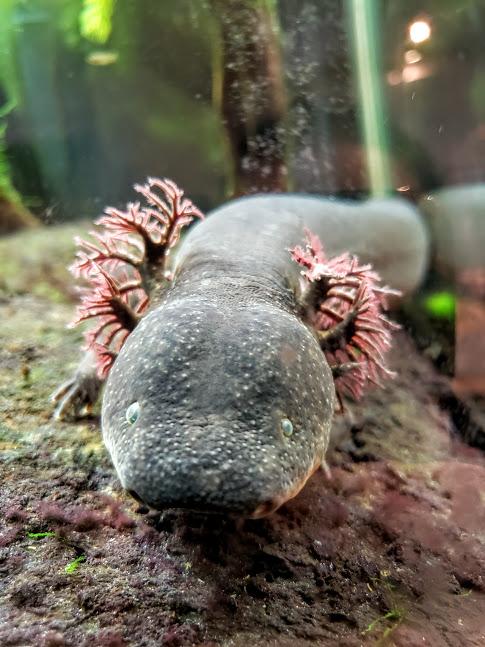
Peale was interested in mud iguanas, or sirens, beause they seemed to possess hybrid features, having lungs like reptiles and gills like fish. The greater siren (Siren lacertina) is an eel-like amphibian and one of the three members of the genus Siren. The largest of the sirens and one of the largest amphibians in North America, the greater siren resides in the coastal plains of the southeastern United States.
This specimen, the gift of August Gottlieb Oemler, was sent by Raphaelle Peale. Charles Willson Peale wrote to him on 6 June 1805: "The Syren you sent, is in good health, but I have not yet suffered it to be seen except by my particular friends. I have not been able to contrive the means of exhibiting & pertecting it from injury. I have been at a loss to know its proper food, and therefore have only given it Grass in its Water." Selected Papers, 2, part 2: 844
See "An Account and Description of the Mud-Inguana, or Siren of South-Carolina," Columbian Magazine, January 1789, pp. 12-13 and plate (pictured here).
For similar animals acquired by the Peale Museum, search "Siren."
Oemler was a German-born pharmacist, botanist, and entomologist who settled in Savannah. DAB, 13:629; Jefferson Papers, Founders Onlline, National Archives / https://founders.archives.gov/documents/Jefferson/03-03-02-0467
See also Charles Willson Peale to Thomas Tims, 10 June 1796, Selected Papers, 2, part 1: 149-151.
Specimen Type:
Live/living (presumably eventually taxidermied/preserved)
Current Common Name:
Greater siren
Current Scientific Name
Siren lacertina
Category:
Geographic Origin:
Donor:
Collection: