Object Status:
Unlocated
Accession Date:
January 23, 1792
Primary Source Reference:
Dunlap's American Daily Advertiser (Philadelphia), 23 Jan 1792
Additional Source Text:
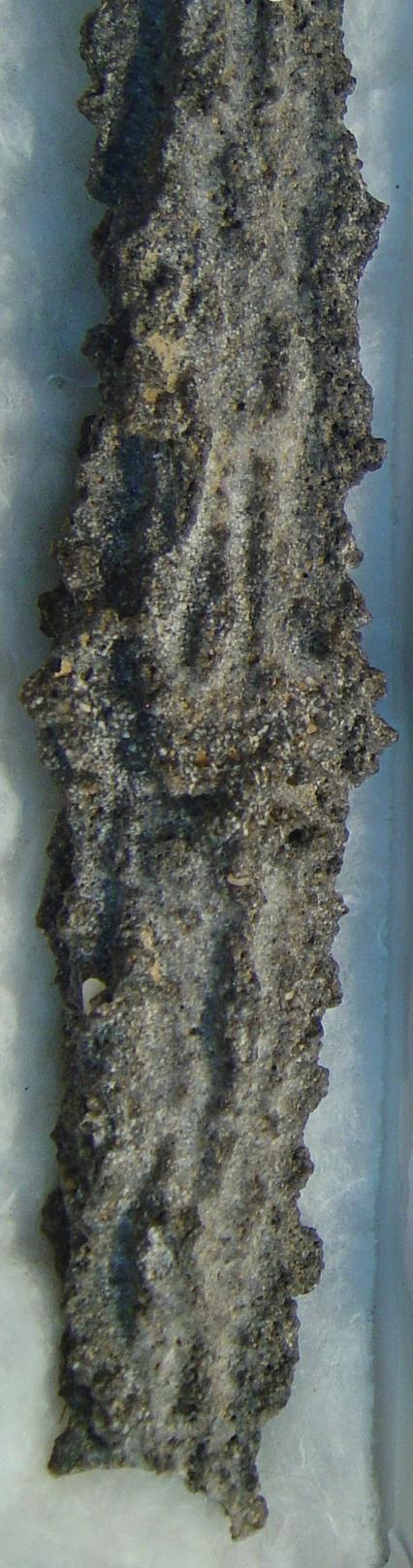
"Found in a field belonging to Matthew Weldon, Esq. of Cape-May [N.J.]. About the last of July 1791, in a thunderstorm, a stream of lightning was seen, by Mr. Weldon, to strike the ground, where neither tree, fence, nor anything higher than some very small shrubs and grass grew. Immediately after the flash, a smoke and fire were discovered at that place, which made him conclude that some old dtree on the ground was on fire. Several persons of the family went immediately to the spot, and found the grass, for some yards around, entirely consumed. In the center of which was a hole of vitrified sand; at the entrance it was about one inch diameter, but considerable lessened under ground, and digging a small distance down, they found that the tube branched out into many branches, that were diminished in their size the deeper they pursued them, which was something morre than 3 feet beneath the surface of the earth; how much deeper they might have gone was not tried. In the passage of the electric fluid, such stones as were in its way were melted and cemented to the tubes."
Notes:
This form of solidified earth and sand, created by lightning, is called fulgurite.
The donor may have been Ann Pine (1755-1812), the wife of Stephen Decatur Sr. (1751-1808); they were living in Philadelphia at the time.