Object Status:
Unlocated
Accession Date:
February 7, 1791
Primary Source Reference:
Dunlap's American Daily Advertiser (Philadelphia), 7 Feb 1791
Additional Source Text:
"The old oak is now a stump, about 8 feet high and 4 feet thick; it stands among aged oaks at the Inns called the Oaks, in Essex, on the borders of Hartfordshire, about 14 or 15 miles from London."
The donor is identified as "Congressman for Maryland."
Also listed in New-Hampshire Spy (Portsmouth), 23 Feb 1791
Notes:
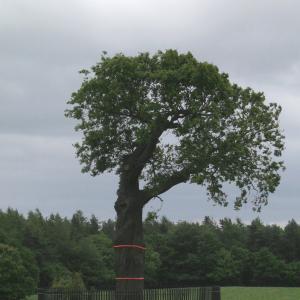
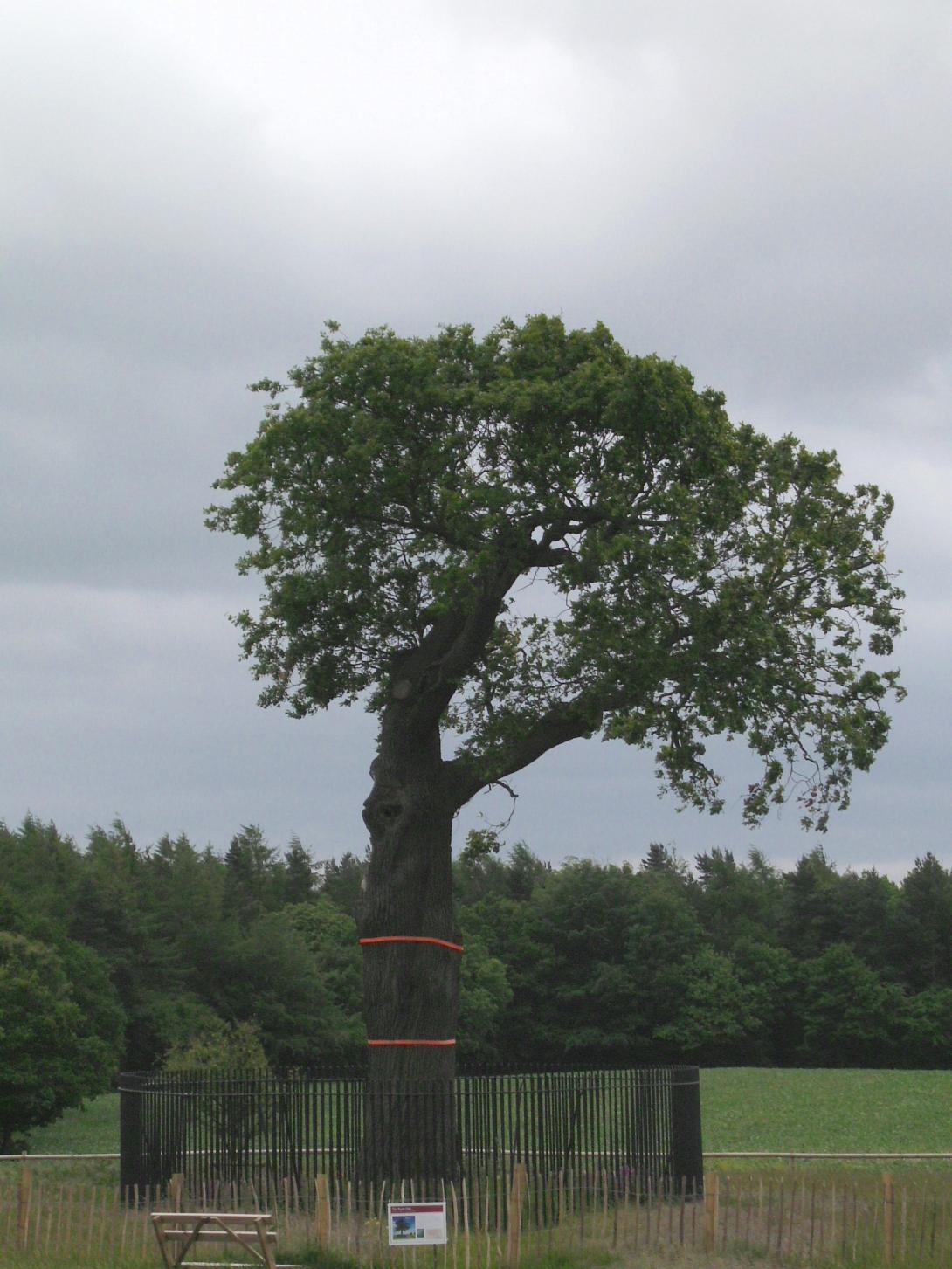
"The Royal Oak is the English oak tree within which the future King Charles II of England hid to escape the Roundheads following the Battle of Worcester in 1651. The tree was in Boscobel Wood, which was part of the park of Boscobel House. Charles told Samuel Pepys in 1680 that while he was hiding in the tree, a Parliamentarian soldier passed directly below it. The story was popular after the Restoration, and is remembered every year in the English traditions of Royal Oak Day. . . . The tree standing on the site today is not the original Royal Oak, which is recorded to have been destroyed during the seventeenth and eighteenth centuries by tourists who cut off branches and chunks as souvenirs." (Wikipedia, s.v. Royal Oak)
Pictured here is a descendant of the original tree.
William Vans Murray (1760-1803) was an American lawyer, politician, and statesman. He served in the Maryland House of Delegates from 1788 to 1790, and in the United States House of Representatives from 1791 to 1797. He was the United States Ambassador to the Netherlands from 1797 to 1801.