Object Status:
Unlocated
Accession Date:
November 11, 1788
Primary Source Reference:
Charles Willson Peale Diary; Selected Papers, 1: 546
Additional Source Text:
In A Scientific and Descriptive Catalogue of Peale's Museum (Philadelphia, 1796), p. 29, Peale wrote that the red fox "is a great destroyer of poultry. It also devours rabbits; which, imitating the voice of a dog, it hunts down for its prey."
In his "Walk through the Phil[adelphi]a Museum" (1805-1806), p. 19, Peale wrote that the red fox "is most in demand by Furiers and not used by Hatters, who prefer the Grey foxskins. Foxes when taken young become very familiar in confinement, but the Instant they get loose, are apt to bite those who attempt to catch them."
Notes:
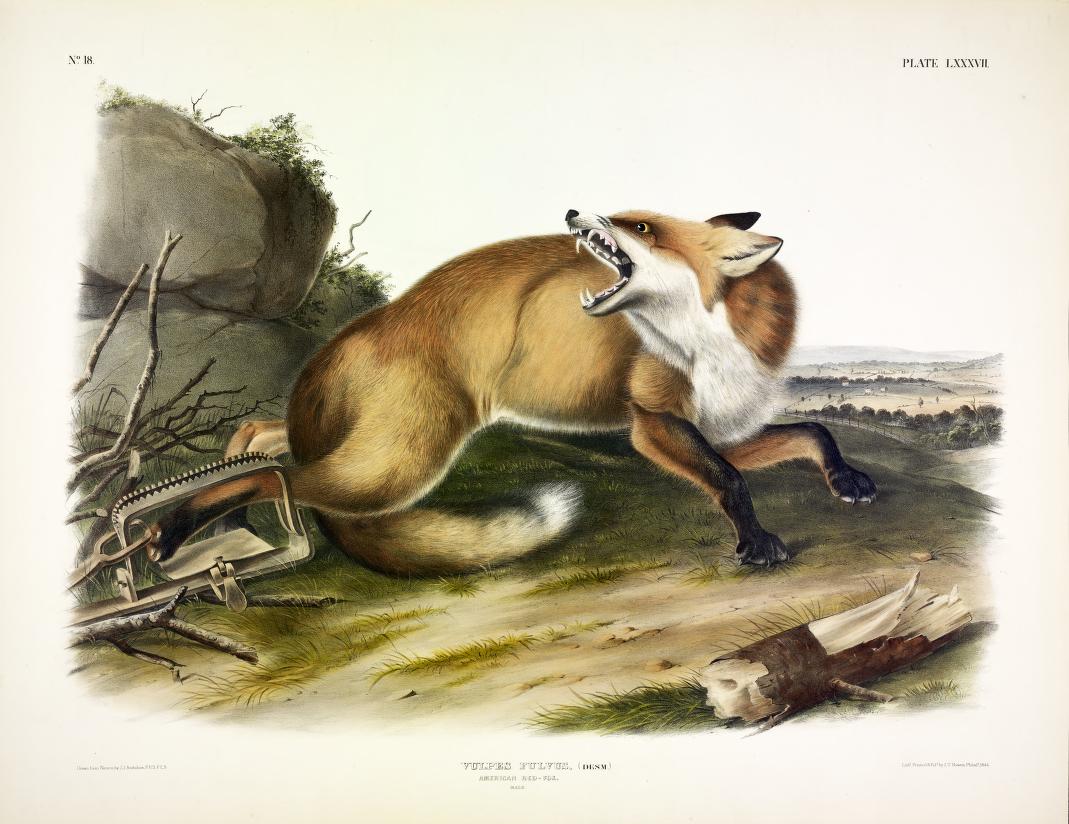
The North American species of the red fox is the largest of the true foxes and one of the most widely distributed members of the order Carnivora occurring in North America.
In April 1805 Meriwether Lewis sent a shipment to Jefferson from Fort Mandan that included thirteen red fox skins, which Jefferson forwarded to Peale. Thomas Jefferson to Charles Willson Peale, 6 Oct 1805; Selected Papers, 2, part 2: 894
The Museum acquired another red fox, "one month old living, which is nourished by a Cat, which accompanied it," on 27 Apr 1821 from A. H. Perkins of Burlington, N.J. Peale Museum Accessions Book, Historical Society of Pennsylvania, p. 113
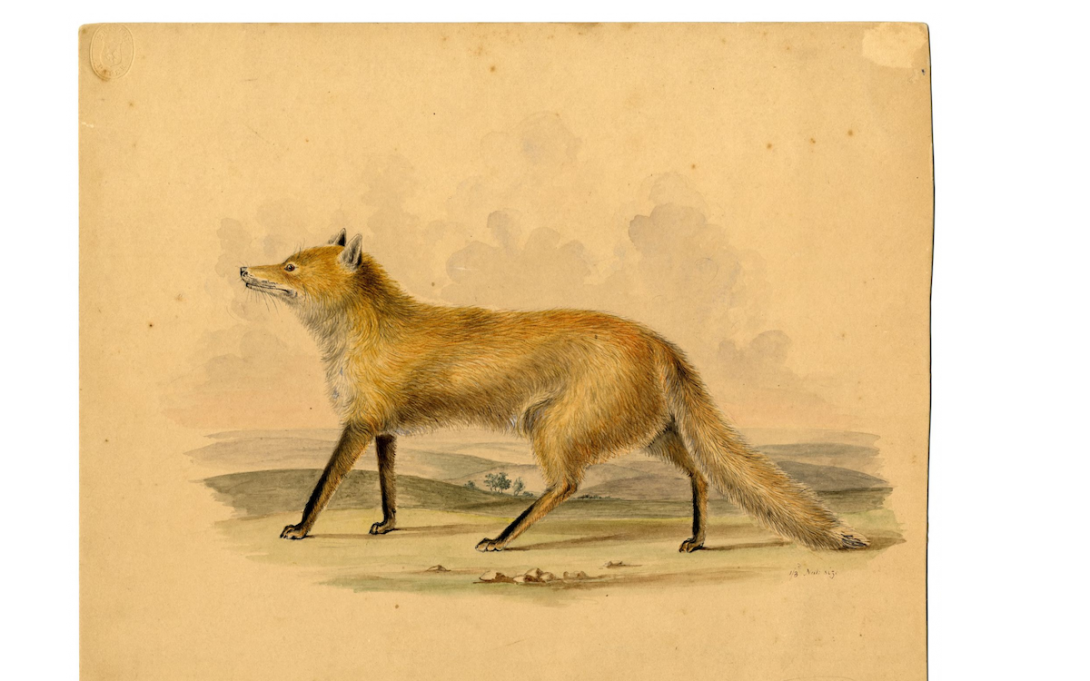
Titian Ramsay Peale executed a watercolor of the red fox while engaged on the Long Expedition, pictured here.
John D. Godman described the red fox, which he called Canis fulvus, in American Natural History. Part I. Mastology, 3 vols. (Philadelphia, 1826-1828), 1: 276 -280 / https://hdl.handle.net/2027/dul1.ark:/13960/t4wh6dv4h?urlappend=%3Bseq=…
Godman noted that "A very young whelp of this fox was some time ago brought to the Philadelphia Museum in company with its foster mother, a common cat which had adopted and appeared to be very fond of it. She continued to nurse the little fox for several weeks, expressing much affectionate solicitude when he wandered from her, notwithstanding the frequent ungrateful bites inflicted by her vicious foundling. How long this singular situation may have continued, or to what result it would have led, is unknown. The fox strayed too far from his cautious nurse, fell from the platform of a tall staircase to the ground, and was killed: the poor cat evinced as much sorrow for her loss as if it had been really her own offspring."
The donor, James Trenchard (born ca. 1746), was a master engraver who in 1786 helped found the Columbian Magazine and engraved several of Charles Willson Peale's drawings for the magazine.
Specimen Type:
Living/Live (presumably eventually taxidermied/preserved)
Peale's Common Name:
Red Fox
Peale's Scientific Name:
Canis Vulpis, Lin.
Current Common Name:
North American red fox
Current Scientific Name
Vulpes vulpes fulva