
Object Status:
Unlocated
Accession Date:
May 1, 1818
Primary Source Reference:
Peale Museum Accessions Book, Historical Society of Pennsylvania, p. 93
Notes:
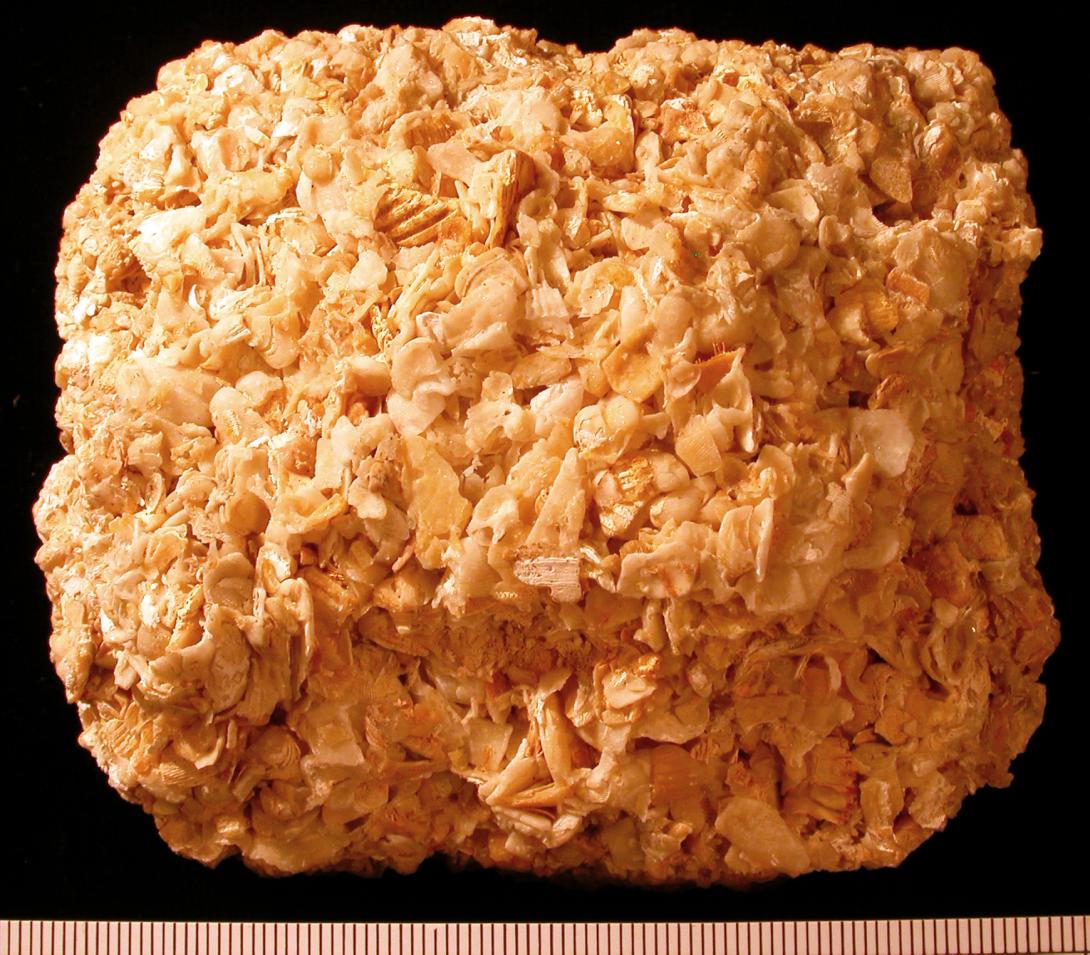
This was coquina, a cemented "hash" of shell fragments and sand. The Castillo De San Marcos and 36 surviving colonial residences in St. Augustine contain walls built with the stones dug from these quarries. Anastasia Island is a barrier island off the Atlantic coast of Florida, east of St. Augustine.The Anastasia quarries are a state park today / https://www.floridastateparks.org/Anastasia/spanish-coquina-quarries-an…
"Beneath the sandy soil of most of the island lie layers of coquina, a shelly rock in various stages of consolidation. This rock is composed primarily of whole and fragmented shells of the donax, or coquina, clam admixed occasionally with scattered fossils of various marine vertebrates, including sharks' and rays' teeth. This deposition is known as the Anastasia Formation, and was formed during the Late Pleistocene epoch, in the period of successive glacial ages from about 110,000 years to 11,700 years ago. It is the only local natural source of stone, and was quarried by the Spanish and later the British to construct many of the buildings in St. Augustine (including the Castillo de San Marcos)." Wikipedia
The 1817 Florida Expedition was the first major privately funded collecting endeavor of the Academy of Natural Sciences of Philadelphia. The Expedition was financed and organized by the newly elected president, William Maclure, and included an Academy founder and Curator, Thomas Say; Vice President George Ord; and recently elected member Titian Ramsay Peale. See Thomas Peter Bennett, "The 1817 Florida Expedition of the Academy of Natural Sciences," Proceedings of the Academy of Natural Sciences of Philadelphia, 152 (Oct. 14, 2002): 1-21.
The expedition also brought back coquina donated by a General Shydder. Accessions Book, p. 93
On 20 May 1823 R. Dietz donated a "Geological specimen (Mass of Shells) from the Island St. Anastasia." Accessions Book, p. 123. Dietz was the author of "Description of a Testaceouos Formation at Anastasia Island," Journal of the Academy of Natural Sciences of Philadelphia, vol. 4, part 1 (1824): 73-80, which stated that "A mass in the Philadelphia Museum contains a fragment of Nassa trivittata, nobis" (p. 80) / https://www.biodiversitylibrary.org/page/24655187 . Nassa trivittata is now Tritia trivittata, the threeline mud snail, a marine gastropod mollusk in the family Nassariidae, the Nassa mud snails or dog whelks.