Object Status:
Unlocated
Accession Date:
October 19, 1818
Primary Source Reference:
Peale Museum Accessions Book, Historical Society of Pennsylvania, p. 95
Notes:
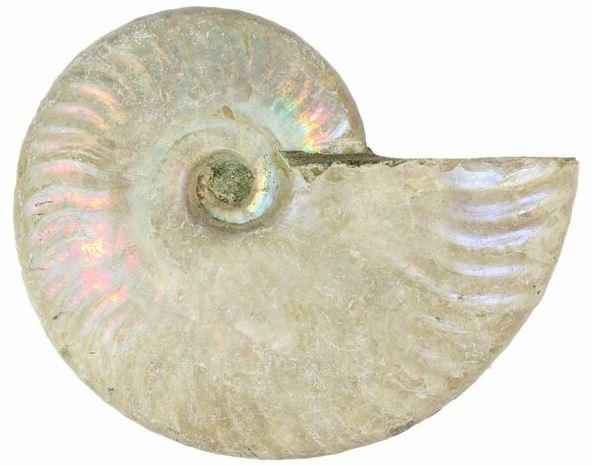
Ammonites, or Cornua ammonis (horns of Ammon), called snake stones, or serpent stones, are fossils of an extinct group of cephalopods of the subclass Ammonoidea. If this fossil retained some irridescent properties of its nacre, it may have been described as having a metallic appearance, similar to the one pictured here.
The Peale Museum received other ammonites as follows: in July 1805 from Mr. Hillman of Bristol. Eng. ("a Mass of Cornu Amonis from Dorsetshire") and Mr. Pittman, of Bristol, Eng. ("a variety of Cornuamonis, from Dorsetshire England" and "Aminoides from Dorsetshire") [these possibly all from the same person; Hillman donated many other objects, Pittman none]; and on 5 Nov 1822 from James Miles (an "organic relic resembling an Ammonite from Erie County Pennsylv[ani]a"). Accessions Book, pp. 10, 11, 122
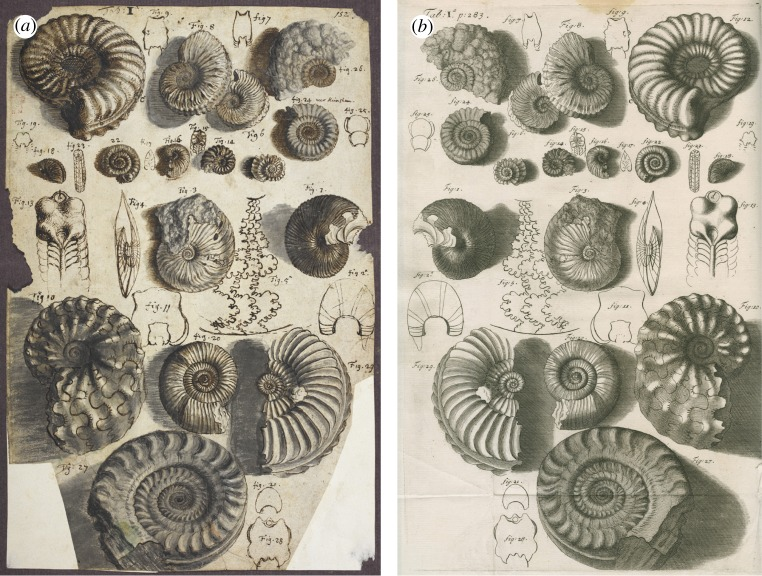
Also pictured here are drawings of fossils by Robert Hooke and Richard Waller that were the basis of the engravings in Hooke's Posthumous Works (1705).
Current Common Name:
Snake stone
Current Scientific Name
Cornua ammonis