
Object Status:
Unlocated
Accession Date:
April 12, 1796
Primary Source Reference:
Aurora. General Advertiser (Philadelphia), 12 Apr 1796
Additional Source Text:
"It belongs to the genus Chama: a species between the oyster and cockle. It measures in a straight line, three feet one inch -- and across, two feet six inches. It was lately brought from the East Indies, by Captain Ashmead; and came from a place called Chillygong, Bengal [now Chattogram, Bangladesh]."
Guide to the Philadelphia Museum (Philadelphia,1805), p. 5: "In the centre of the [Marine] room, supported on a pedestal, stands the Chama, a shell 3 feet long and 185 lbs. weight -- a pair of them are behind the railings."
Notes:
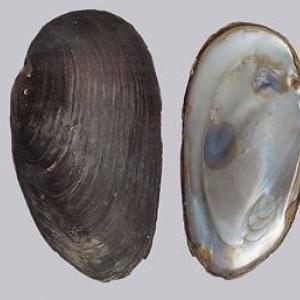
The giant clams (formerly Chama gigantea)) are now several species in the genus Tridacna and are the largest living bivalve mollusks. The one most commonly associated with the description giant clam is Tridacna gigas, pictured here, one of the most endangered clam species. Antonio Pigafetta documented these in his journal as early as 1521. One of a number of large clam species native to the shallow coral reefs of the South Pacific and Indian oceans, they can weigh more than 200 kilograms (440 lb), measure as much as 120 cm (47 in) across and have an average lifespan in the wild of over 100 years.
Specimen Type:
Shells
Current Scientific Name
Tridacna gigas