Object Status:
Unlocated
Accession Date:
November 2, 1822
Primary Source Reference:
Peale Museum Accessions Book, Historical Society of Pennsylvania, p. 122
Additional Source Text:
"Deposited by Dr. Mease."
"The largest of the two Syrens, found dead this morning." Accessions Book entry of 4 Nov 1822
Notes:
One of these two animals (presumably a greater siren [em>Siren lacertina]) died two days after the deposit by James Mease. The other was given to Richard Harlan, who dissected it, identified it as Amphiuma means (Garden), and returned it to the Peale Museum on 22 Nov in the name of James Mease. (That deposit was recorded in the Accessions Book as "Sirena lacertina Chrysodonta larviformis.")
In his essay "Dissection of a Bactracian Animal in a living state," read 5 Feb 1823, in Journal of the Academy of Natural Sciences of Philadelphia, 3, no. 1 (1823): 54-59 / https://www.biodiversitylibrary.org/page/24668694, Harlan wrote: "The specimen was sent from Georgia to Dr. Mease of this city. An account of a similar animal has lately been published under the name of 'Chrysodonta larvaeformis' [by Samuel Latham Mitchill in "Description of a batracian animal from Georgia, different from the reptiles of that order hitherto known," Medical Recorder 5 (1822): 499-503]. . . . This specimen is deposited in the Philadelphia Museum, under the name Amphiuma means (Garden)."
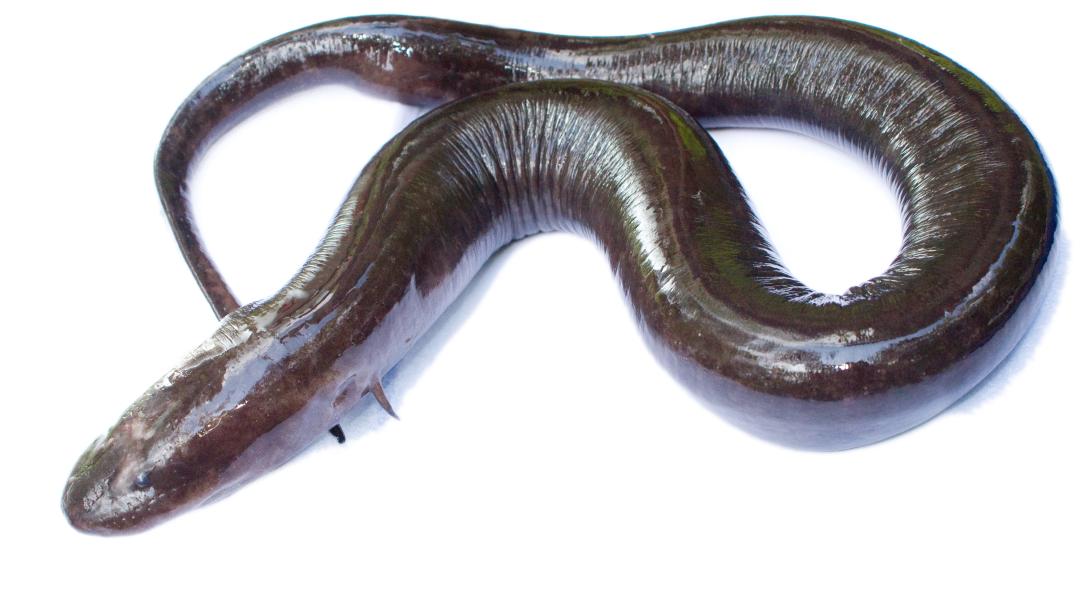
The two-toed amphiuma is a snake-like salamander found chiefly in the southeastern United States. It is commonly, but incorrectly, called "congo snake," "conger eel," or the "blind eel." Two-toed amphiumas are some of the largest extant amphibians in the world.
The greater siren (Siren lacertina) is an eel-like amphibian and one of the three members of the genus Siren. The largest of the sirens and one of the largest amphibians in North America, the greater siren resides in the coastal plains of the southeastern United States.
For similar animals acquired by the Peale Museum, search "Siren."
James Mease, M.D. (1771–1846) was a prominent scientist and physician and the author of The Picture of Philadelphia: giving an account of its origin, increase and improvements in arts, sciences, manufactures, commerce and revenue. With a compendious view of its societies, literary, benevolent, patriotic, & religious. Its police--the public buildings--the prison and penetentiary system--institutions, monied and civil--museum (Philadelphia, 1811).
Richard Harlan (1796-1843), M.D., was an American paleontologist, anatomist, and physician. He was appointed the Peale Museum's professor of comparative anatomy in April 1821.
See also Charles Willson Peale to Thomas Tims, 10 June 1796, Selected Papers, 2, part 1: 149-151.
Specimen Type:
Live/living (presumably eventually taxidermied/preserved)
Peale's Scientific Name:
Amphiuma means (Harlan's name)
Current Common Name:
Two-toed Amphiuma
Current Scientific Name
Amphiuma means