Object Status:
Unlocated
Accession Date:
February 7, 1791
Primary Source Reference:
Dunlap's American Daily Advertiser (Philadelphia), 7 Feb 1791
Notes:
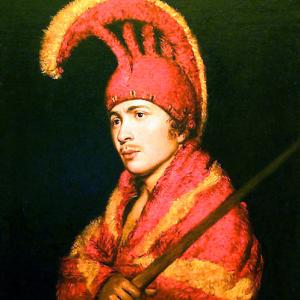
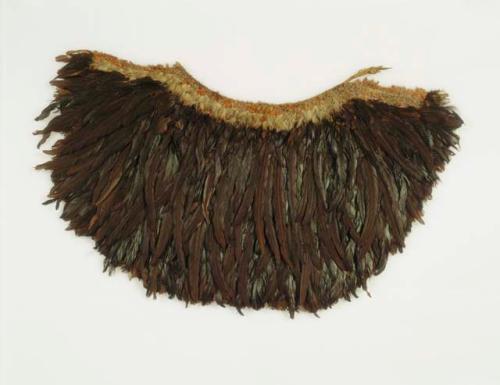
The ʻAhu ʻula (feather cloak in the Hawaiian language) was a symbol of the highest rank of the chiefly aliʻi class of ancient Hawaii. The feathered cloaks and capes provided physical protection, and were believed to provide spiritual protection for their wearers.
The Peabody Museum of Archaeology and Ethnography, Harvard University, acquired many cultural items in 1899 from Moses Kimball's Boston Museum. Kimball and P. T. Barnum jointly purchased many of the Peale collections when they were sold about 1849. This donation cannot be positively identified with a particular extant feathered cloak, but it may have resembled the one at the Peabody pictured here.
The Peale Museum received two sets of feather cloaks and headdresses in addition to this cloak. See the entry "An Otahitian dress, consisting of a long cloak and a cap" where a different cloak is illustrated.
George Meminger (d. 1798) was a Philadelphia merchant and the owner of 900 acres in Mifflin co., Pa. He did business with Europe and the West Indies, importing cheese, cognac, wine, and sugar. He was appointed a captain in the Marine Corps shortly before his death. Meminger was a subscriber to Bartholomew Burges, A series of Indostan letters; containing a striking account of the manners & customs of the Gentoo nations & of the Moguls & other Mahomedan tribes in Indostan (New York, 1790).